Home / History
History
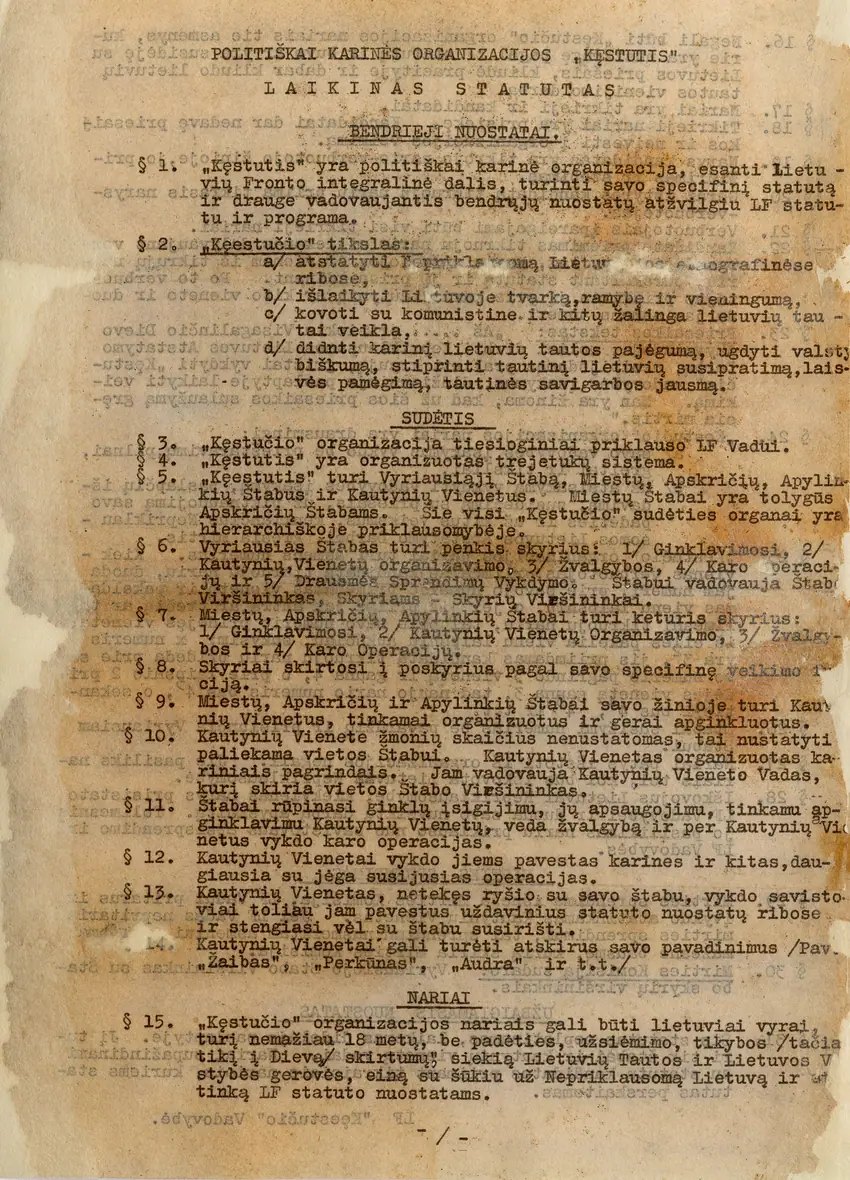
Juozas Vitkus-Kazimieraitis (1901–1946) – a military engineer who stayed when he could have fled.
Juozas Vitkus-Kazimieraitis (1901–1946) was a military engineer and lieutenant colonel of the Lithuanian Army and an instructor at the War School, later commander of the Southern Lithuania partisan region. He was killed on 2 July 1946. He was posthumously promoted to colonel and awarded the Order of the Cross of Vytis. His remains were found only in 2022.
Virtual exhibition · LGGRTC“Not one step from my land” (LT)62 chapters: photographs, documents and letters from his childhood in Tirkšliai to the discovery of his remainsOpen the exhibition →Grandson of a book smuggler
- 1901 12 10Born in Ketūnai, at his book-smuggler grandfather’s farmstead by the Šerkšnė
- 1906–1907Family detained in England, children placed in a shelter
- 1918Clerk and secretary of the Tirkšliai district council
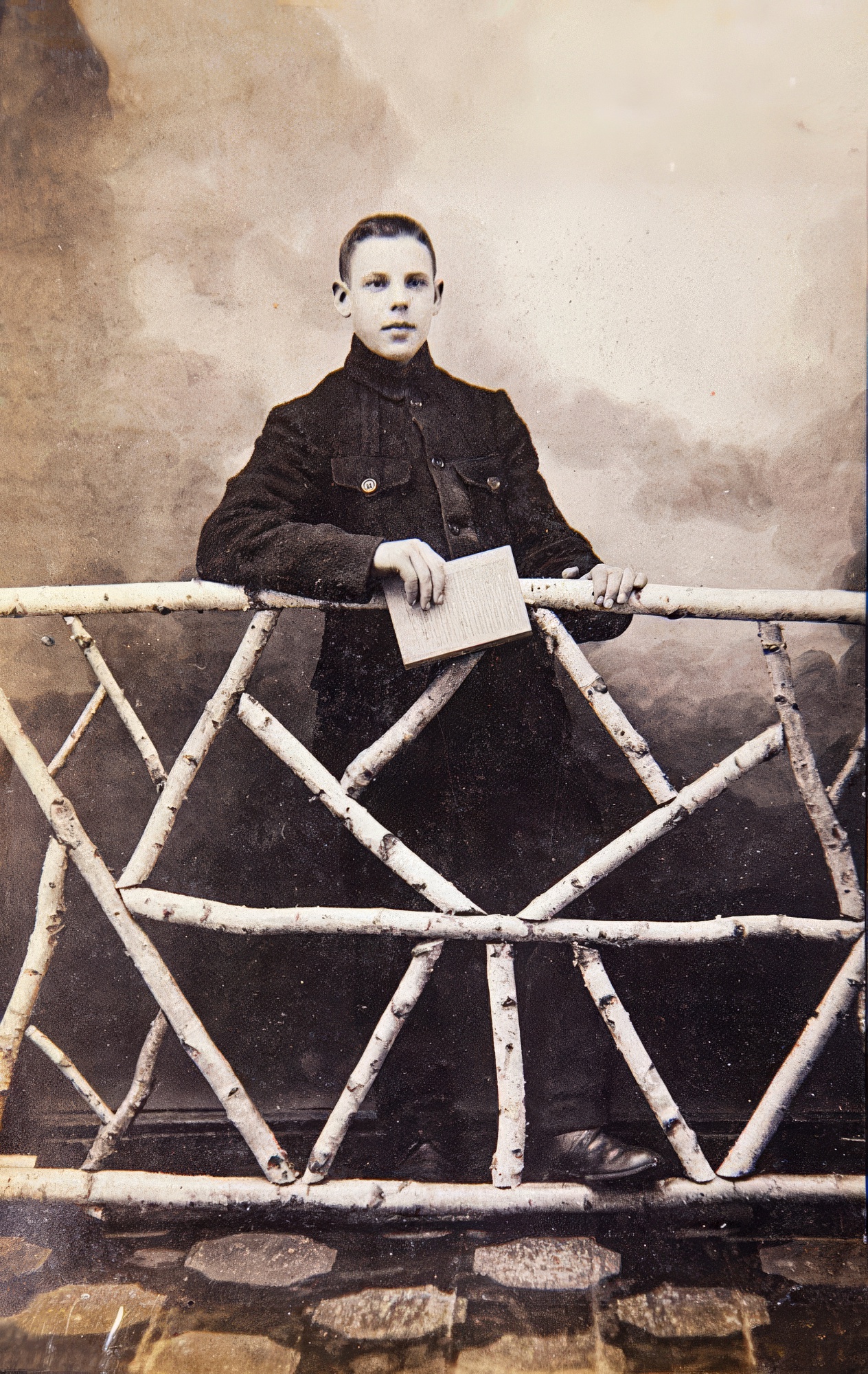
Juozas Vitkus was born on 10 December 1901 at his grandfather Mykolas’s farmstead by the Šerkšnė river, in the village of Ketūnai, about seven kilometres from Tirkšliai. During the Lithuanian press ban his grandfather was a book smuggler, carrying prayer books, calendars and the newspaper “Aušra”.
Read the full chapterCollapse1 min
Around 1903–1904 his father Juozapas Vitkus left for America. In 1906 his mother Marijona tried to join him with the children, but they were all detained in England: the mother was put to work in a laundry and the children were placed in a shelter. When his family did not arrive, the father went looking for them and found them in England. In 1907 the Vitkus family returned to Lithuania and bought a small house in Tirkšliai. Juozas grew up with his elder sister Jadvyga and younger brother Valerijonas.
Juozas attended the Tirkšliai primary school, and in 1913 entered the six-year commercial school in Mažeikiai, where he studied French and German. As a teenager he fell in love with music, made himself a violin from a spruce board and played it. At the end of 1918, after Lithuania declared independence, he began working as clerk and secretary of the Tirkšliai district council. In 1919 he entered the fourth form of the Telšiai gymnasium, having taught himself the third-form course. Over the summer he also mastered the fifth-form course, and in autumn 1920 passed the exams for the sixth form. At the gymnasium he was active in the Catholic youth movement Ateitis.
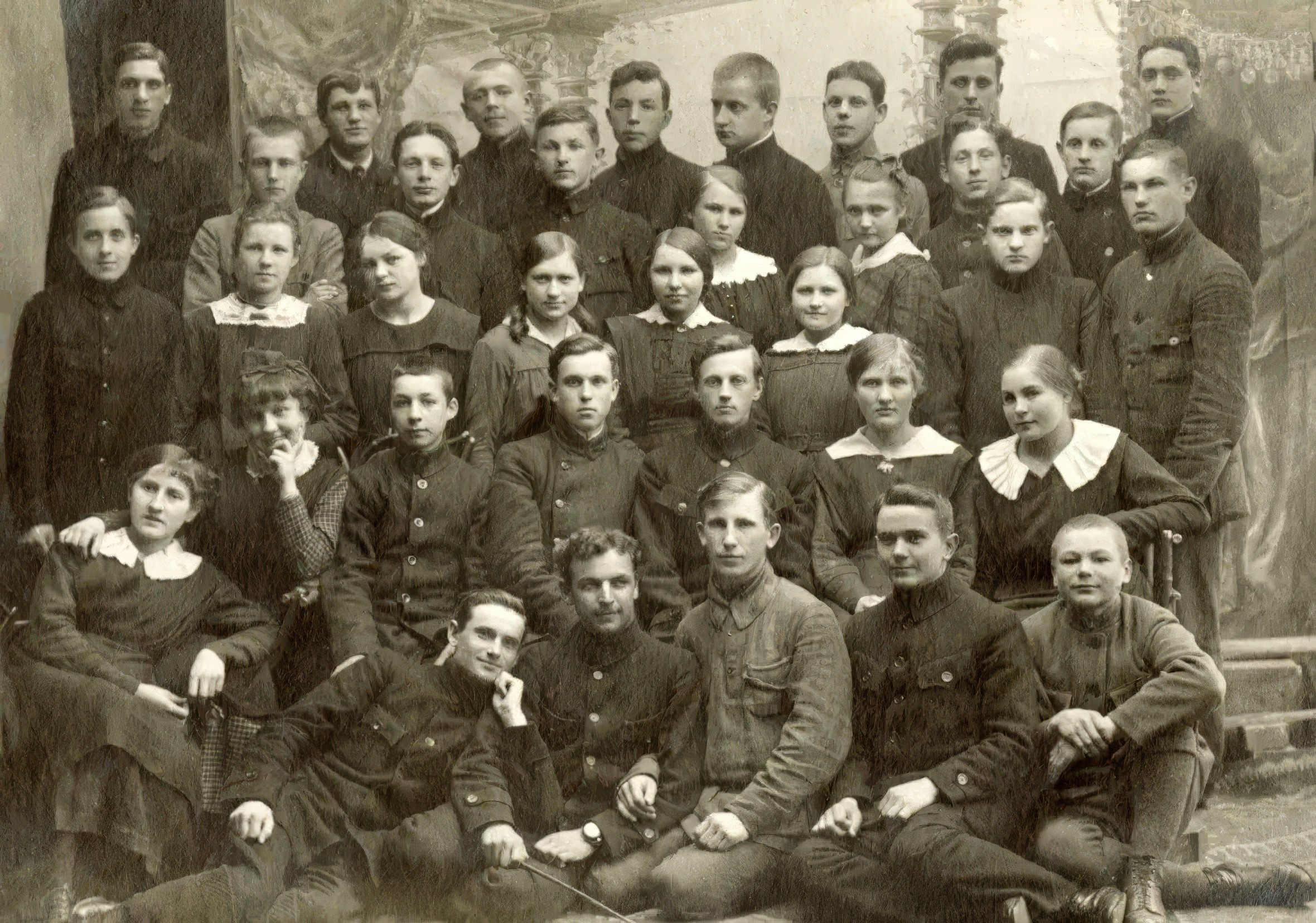
Volunteer
- 1920Entered the Kaunas War School
- 1924–1926Higher Military Technical Courses
- 1927 06 05Married Genovaitė Grybauskaitė
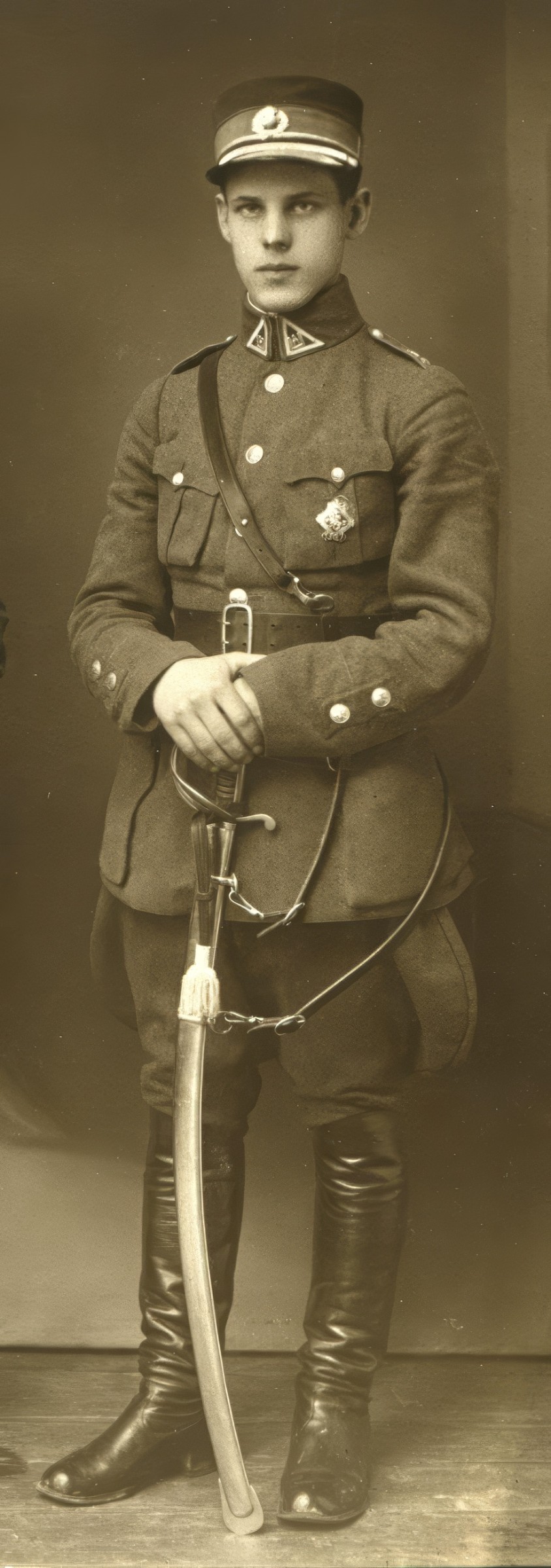
In 1920, as battles with Poland were being fought, Juozas decided to devote his life to the defence of his country and entered the Kaunas War School. In December 1921 he graduated with its 4th class of junior officers, who had to complete a two-year course in one year, and became a second lieutenant. He was posted to the 4th King Mindaugas Infantry Regiment, which defended the Širvintos–Giedraičiai sector, as a junior officer of the 2nd Company, and in February 1923 became company commander. That spring the regiment was moved to Panevėžys, where in 1924 he met the teacher Genovaitė Grybauskaitė.
Read the full chapterCollapse1 min
In November 1924 he was sent to the construction department of the Higher Military Technical Courses in Kaunas. In 1926 he was promoted to first lieutenant; on 30 October he completed the courses and returned to the regiment as senior officer of the 1st Company, and two months later was transferred to the training company of the Technical Regiment in Kaunas. On 5 June 1927 he married Genovaitė in Panevėžys. His division commander wrote of him:
“A gifted officer with organisational ability, moderately strict, of high morals…”Assessment by the division commander, c. 1927
In March 1928 their first son, Vitolis, was born. He died sixteen days later. On 15 May 1928 J. Vitkus was awarded the Lithuanian Independence Medal.
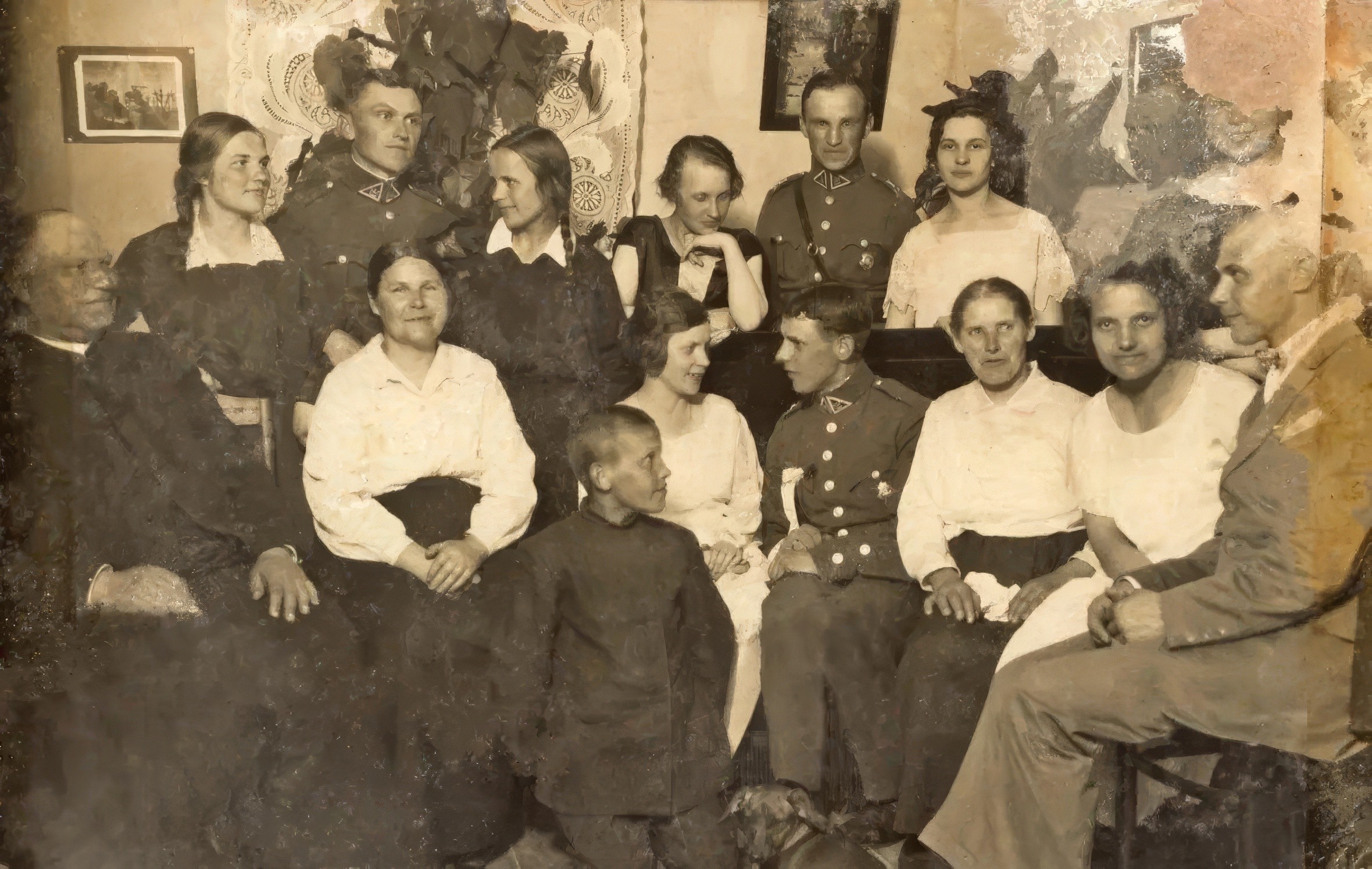
Brussels
- 1928His first attempt to enter failed
- 1929Engineering Department of the Belgian Military Academy
- 1934 07Second in his class, after Prince Albert of Belgium
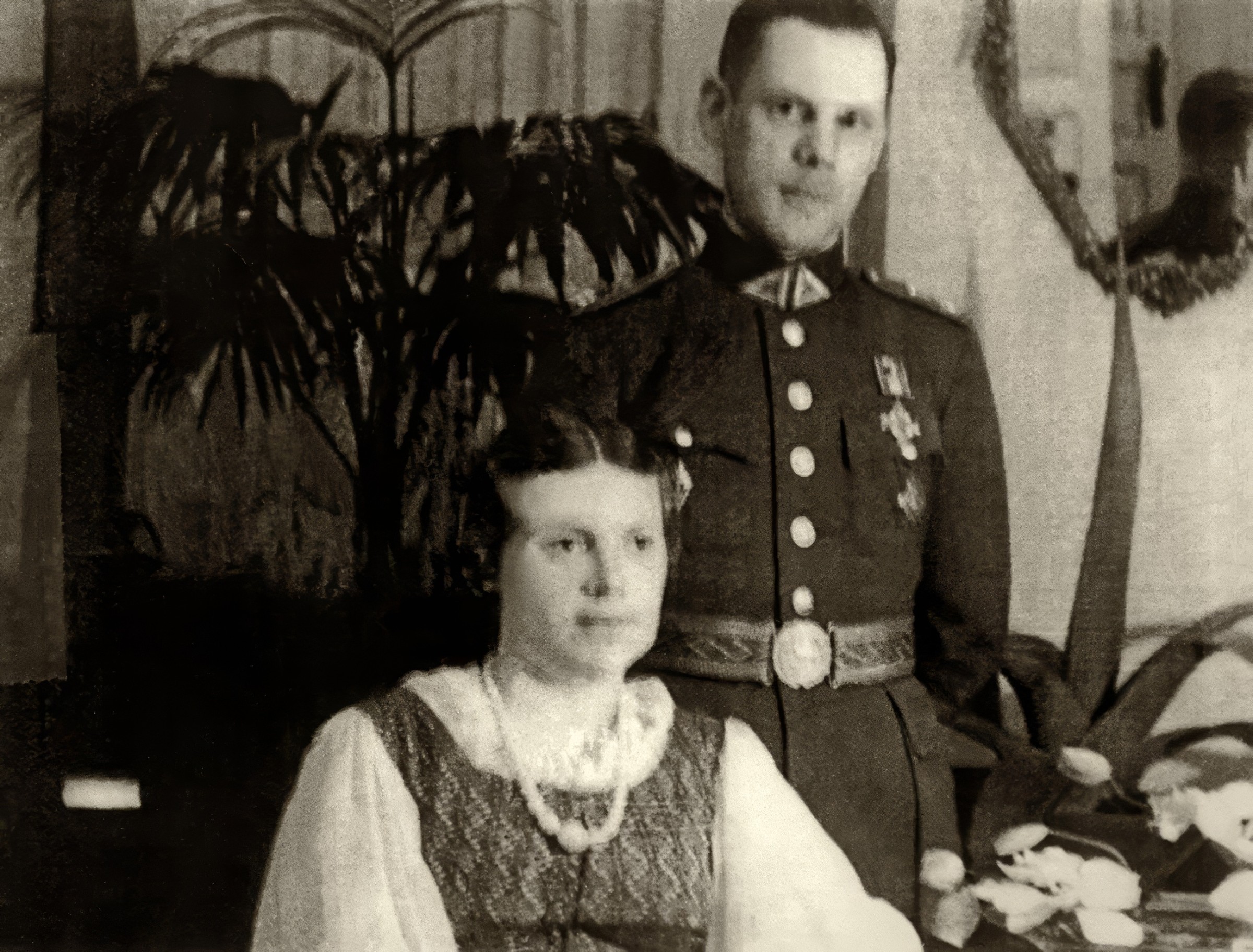
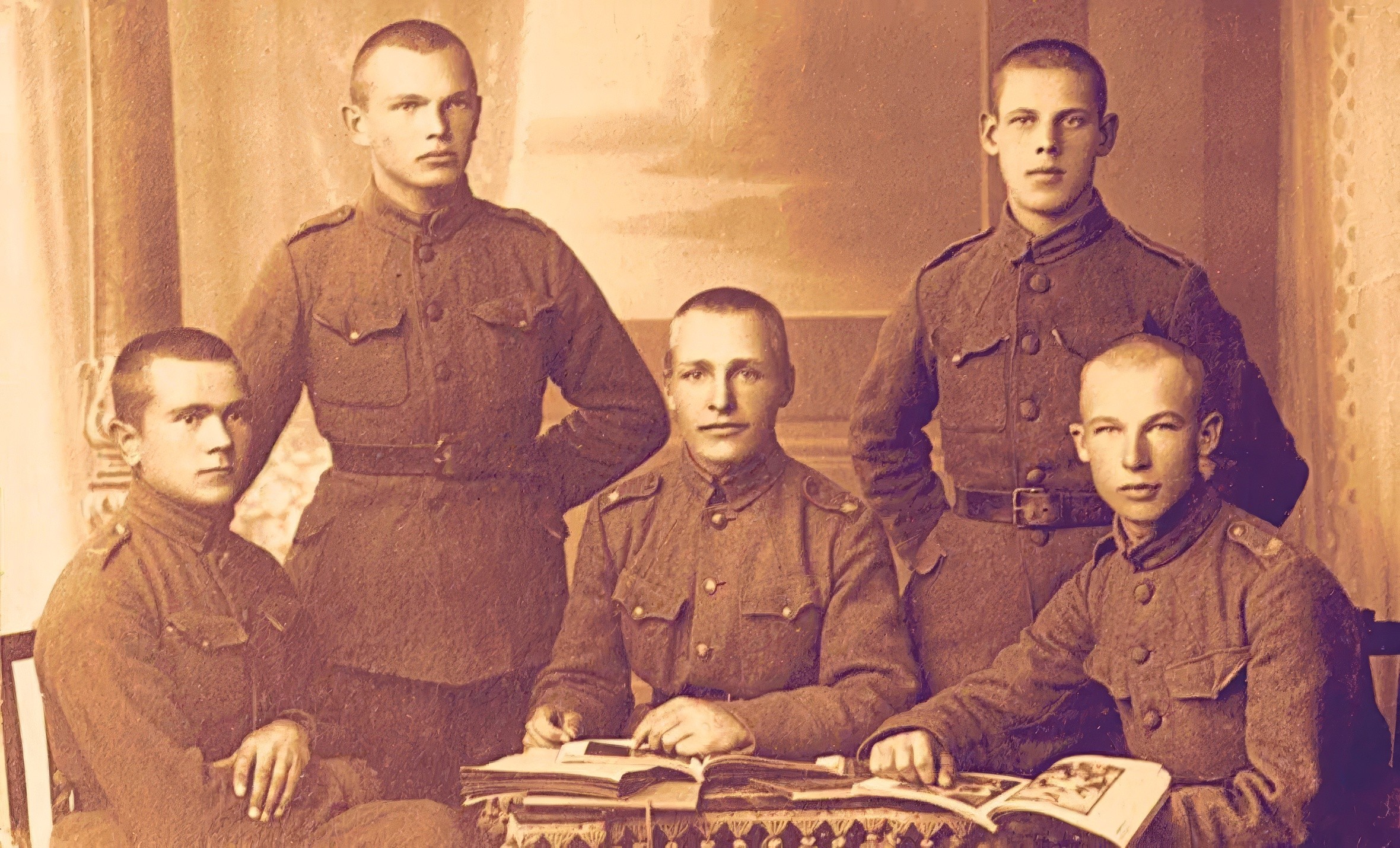
At the end of 1927 he was offered the chance to study at the Engineering Department of the Belgian Military Academy. In autumn 1928 he went to Brussels to sit the entrance exams and wrote to his wife from there:
“A sense of duty calms me when I am restless with longing, and makes me work, work and work again, so that I do not shame myself or my country in the eyes of foreigners.”Letter to his wife, Brussels, 22 October 1928
Read the full chapterCollapse1 min
He failed the exams the first time. “The first exams I have ever failed in my life. Only you, my dearest, can comfort me…” he wrote on 1 December 1928. A year later he tried again, and in November 1929 entered the Engineering Department of the École Militaire.
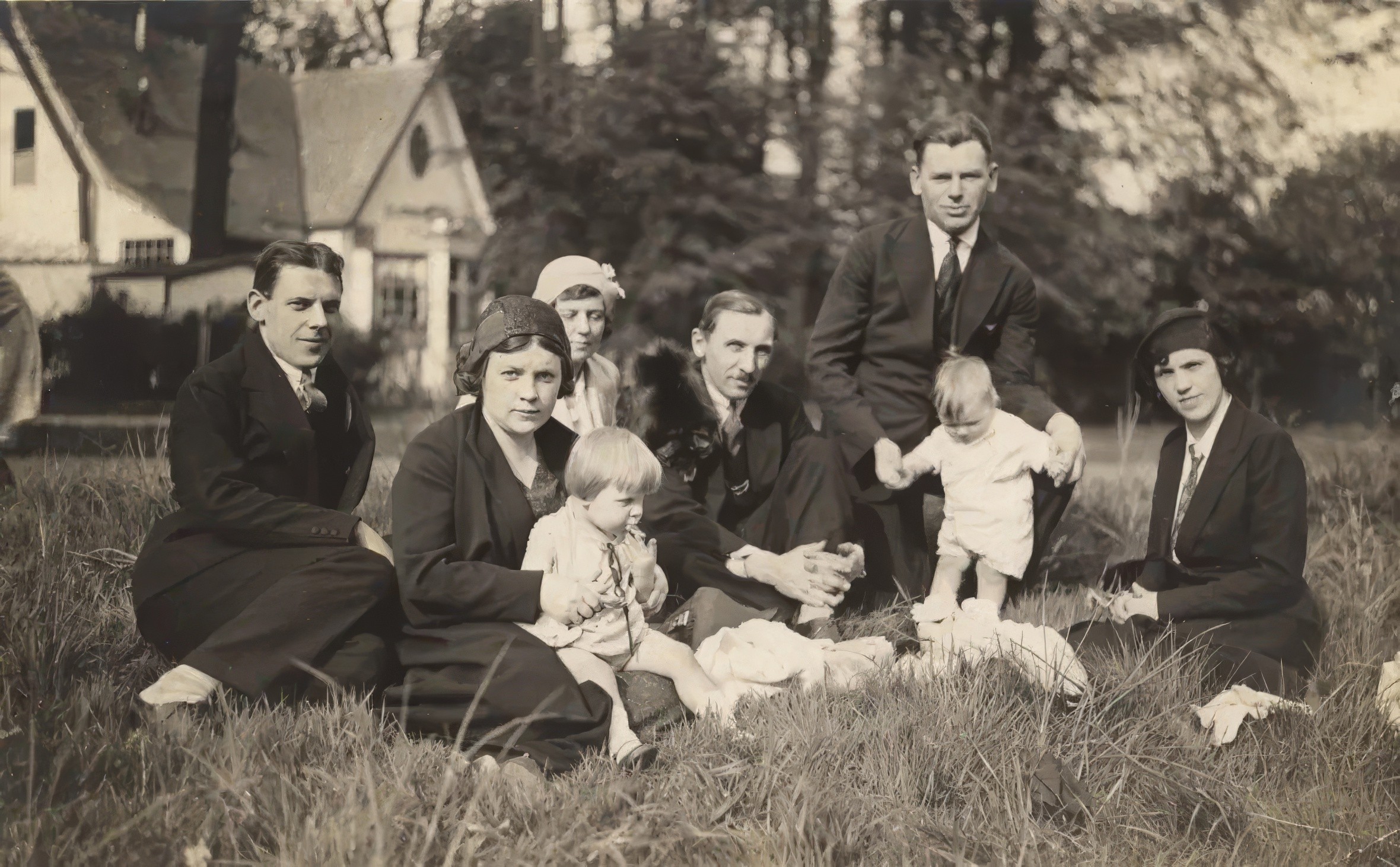
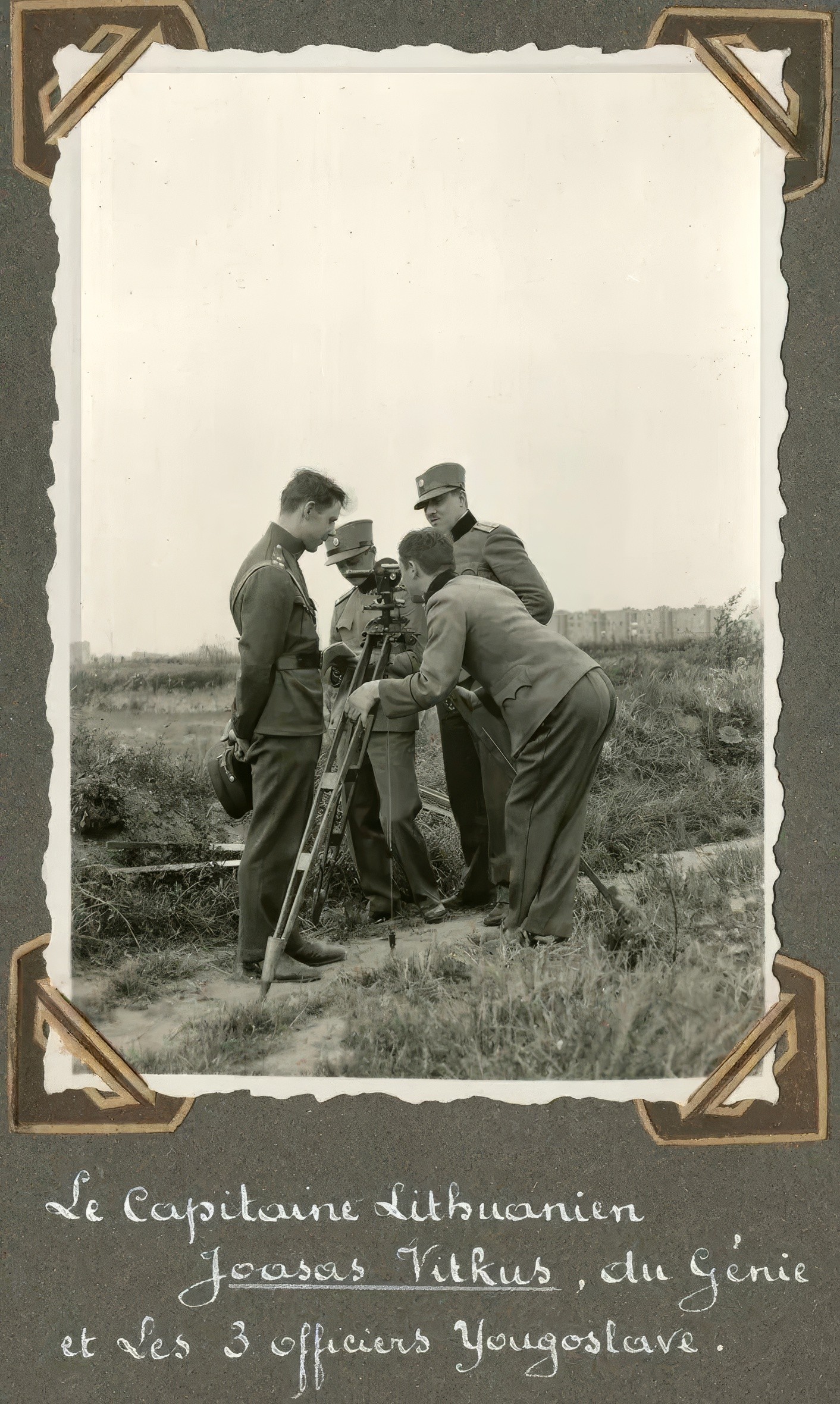
In summer 1930 Genovaitė came to Brussels with their six-month-old son Vytautas, and later his grandmother joined them. Their son Rimgaudas was born and baptised in Brussels. During his studies Juozas was promoted to captain. In July 1934 he passed his final exams and was ranked second in his class, after Prince Albert of Belgium. His Belgian certificate states that he was “very hard-working and very conscientious, suitable for all technical services of his arm”.
Military engineer
- 1934 11 23Major, head of the technical section of the Pioneer Battalion
- 1938Lieutenant colonel, instructor at the War School
- “Father”That is what his soldiers called him
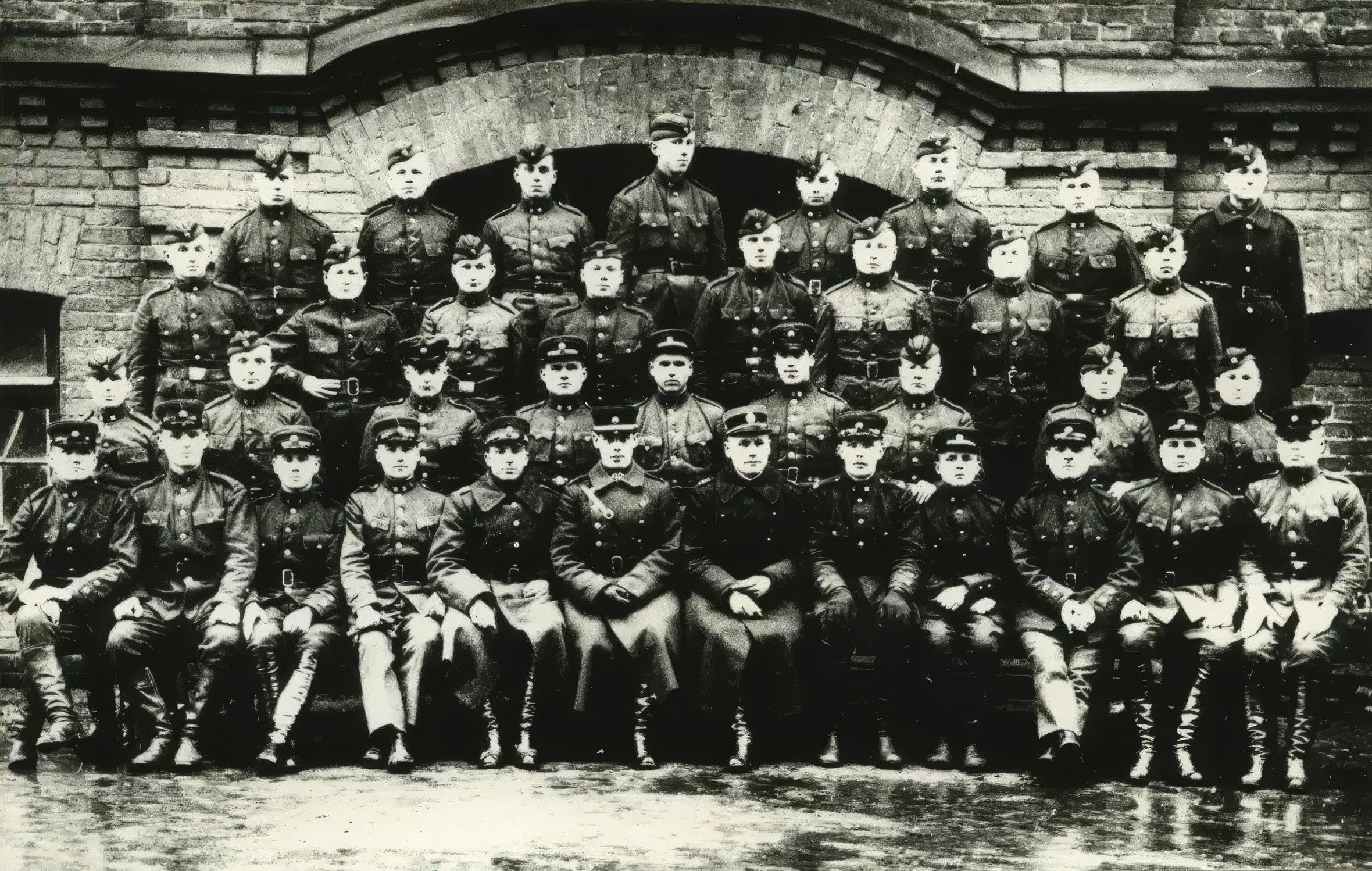
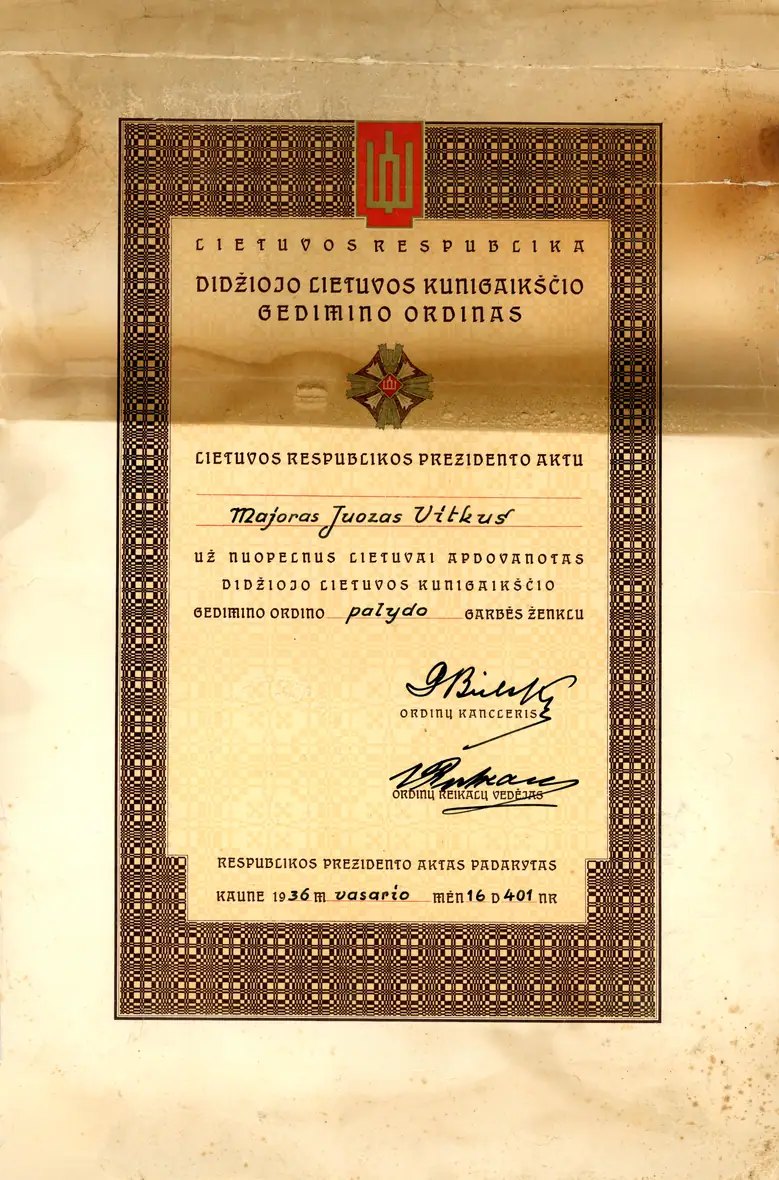
In 1934 the Vitkus family returned to Lithuania. Juozas began serving with the Pioneer Battalion in Šančiai, Kaunas, and on 23 November 1934 was promoted to major. He became head of the battalion’s technical section, trained members of the Riflemen’s Union, taught at the War School, and in 1936 completed another placement in Belgium. On 16 February 1936 he was awarded the honorary badge of the Order of Gediminas, and on 24 June 1938 the Riflemen’s Star. In 1938 he was promoted to lieutenant colonel and transferred to the Kaunas War School to teach military engineering.
The family grew: Algimantas was born in 1934, and the twins Jūratė and Kastytis in 1937. In 1938 the family bought a house in Panemunė. His soldiers called him “Father”: he was strict but fair, and on marches he slept in the barracks with them. He took no money for his lectures to the Riflemen’s Union, and his wife complained that “Juozelis is not practical”.
In 1938–1939 he wrote for the military press: his articles were published in “Kardas”, “Karys” and “Trimitas”. Together with others he edited the publication “Twenty Years of the Military Technical Units, 1938–1939”.
Two occupations
- 1941 06Did not return to the Soviet train during an air raid
- 1941–1944Underground in Vilnius: “Kęstutis”, the LLA war school
- 1944 04Refused a post in the Local Detachment
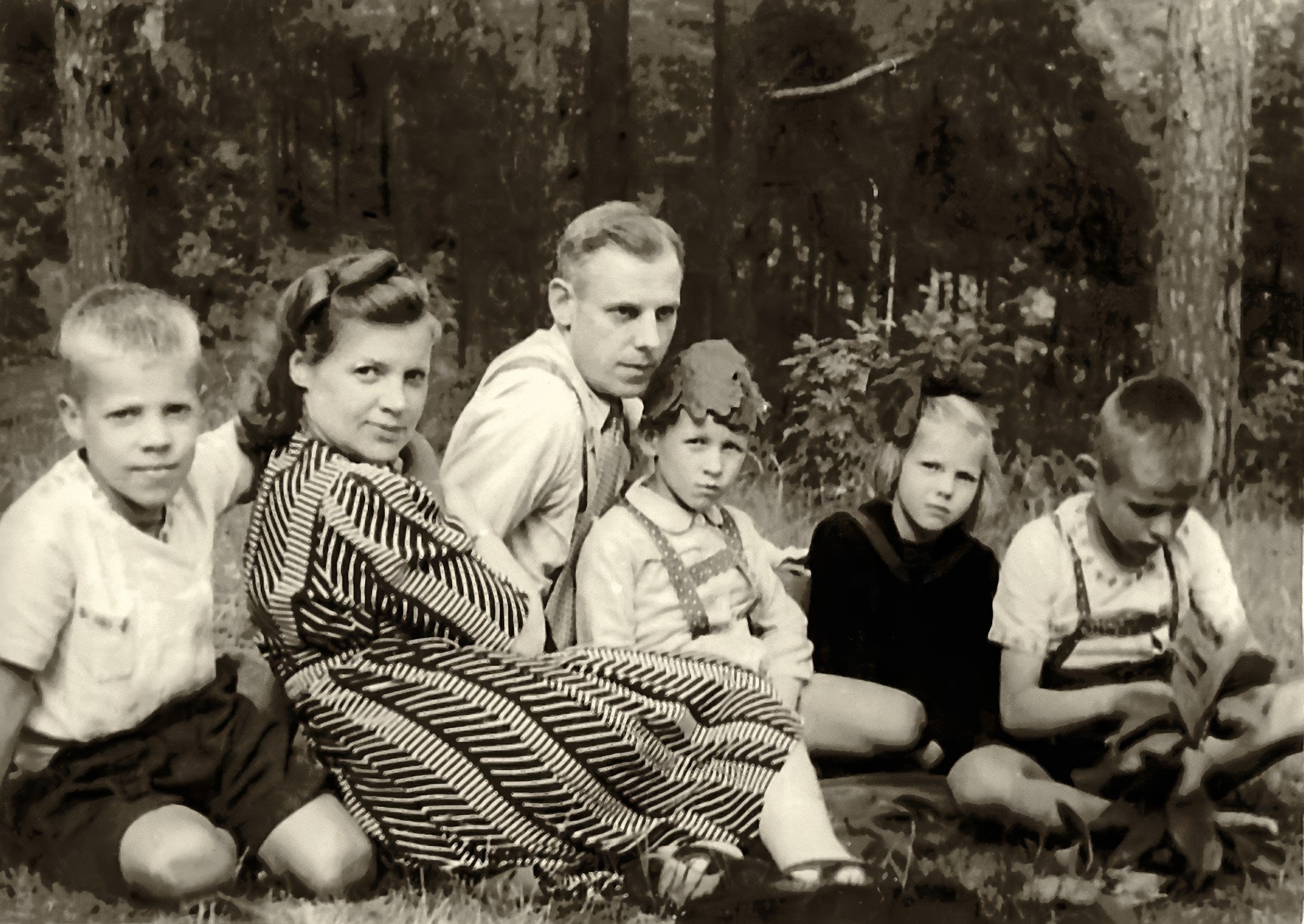
In June 1940 the Soviet Union occupied Lithuania. The War School was abolished and J. Vitkus was transferred to Vilnius. When war broke out in June 1941, he hid in a rye field during an air raid, did not return to the Soviet troop train and made his way back to Vilnius.
Read the full chapterCollapse1 min
During the German occupation he worked as head of the housing and real estate department of the Vilnius city municipality, which allowed him to avoid service in the police. In 1942–1944 he took part in the anti-Nazi resistance: he was a member of the Vilnius staff of the Lithuanian Front, helped found the underground military organisation “Kęstutis” and was chief of staff of its Vilnius district. From autumn 1942 to spring 1944 he taught military engineering at the underground war school of the Lithuanian Freedom Army. In April 1944 he declined the post of assistant commandant in the Local Detachment.
His wife later recalled that on All Souls’ Day 1943, in a Vilnius cemetery, he told her he had a premonition that his family would never have a grave of his.
Resolve
- 1944 07 12Refused to flee to the West
- 1945 05 07Order No. 1: oath, statute, diaries
- 1945 06 18Left legal life for good
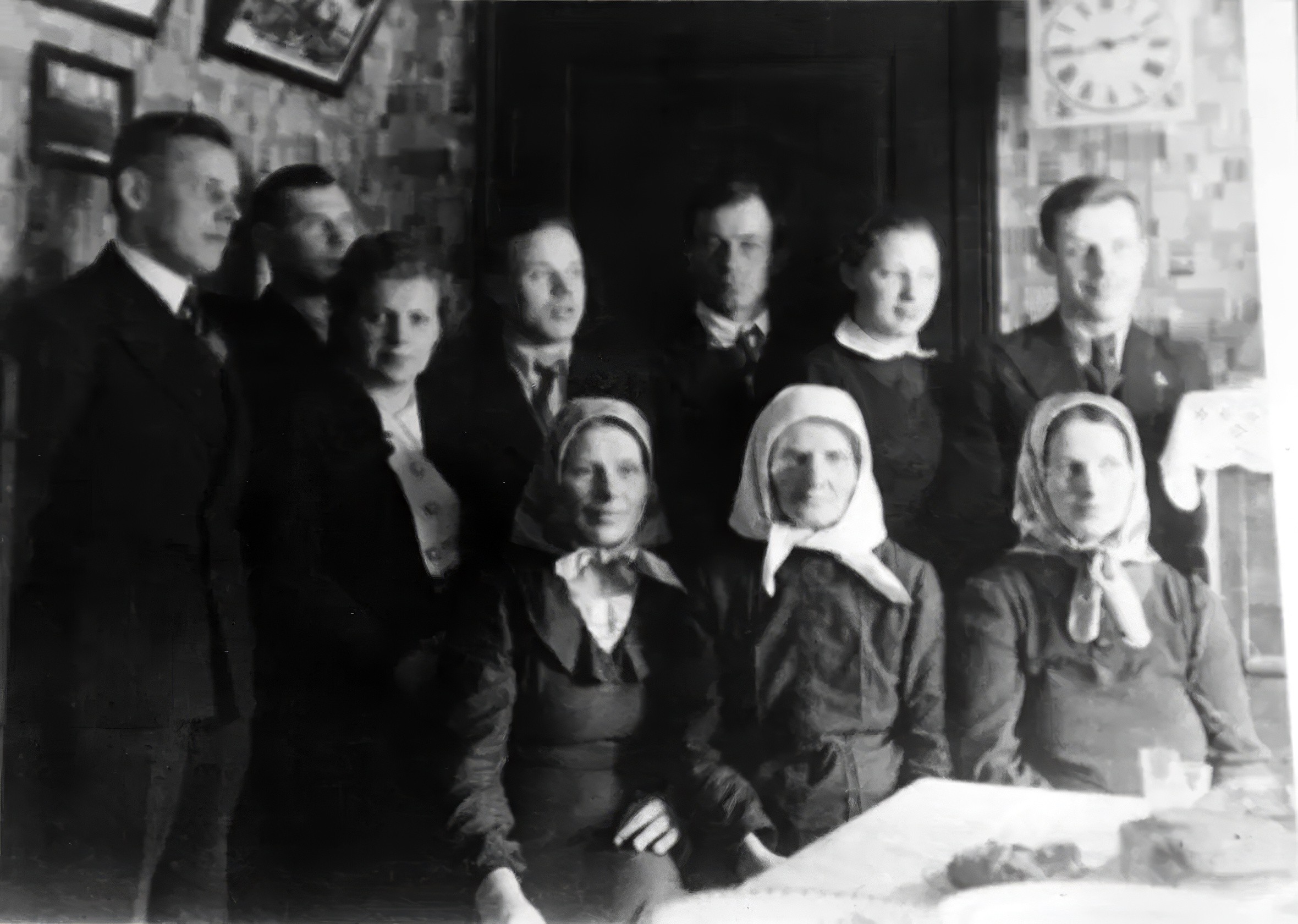
In summer 1944, as the Soviet front approached, his brother Valerijonas urged him to flee to the West together. Juozas refused:
“Not one step from my land – that is my resolve; only my family worries me.”To his brother Valerijonas, Kaunas, 12 July 1944
Read the full chapterCollapse1 min
On 28 October 1944 his youngest son, Liudas, was born. That autumn J. Vitkus took a job as bookkeeper at the Kabeliai forestry office, got to know the local men and chose the code name Kazimieraitis – in his son’s view, hoping for the protection of St Casimir.
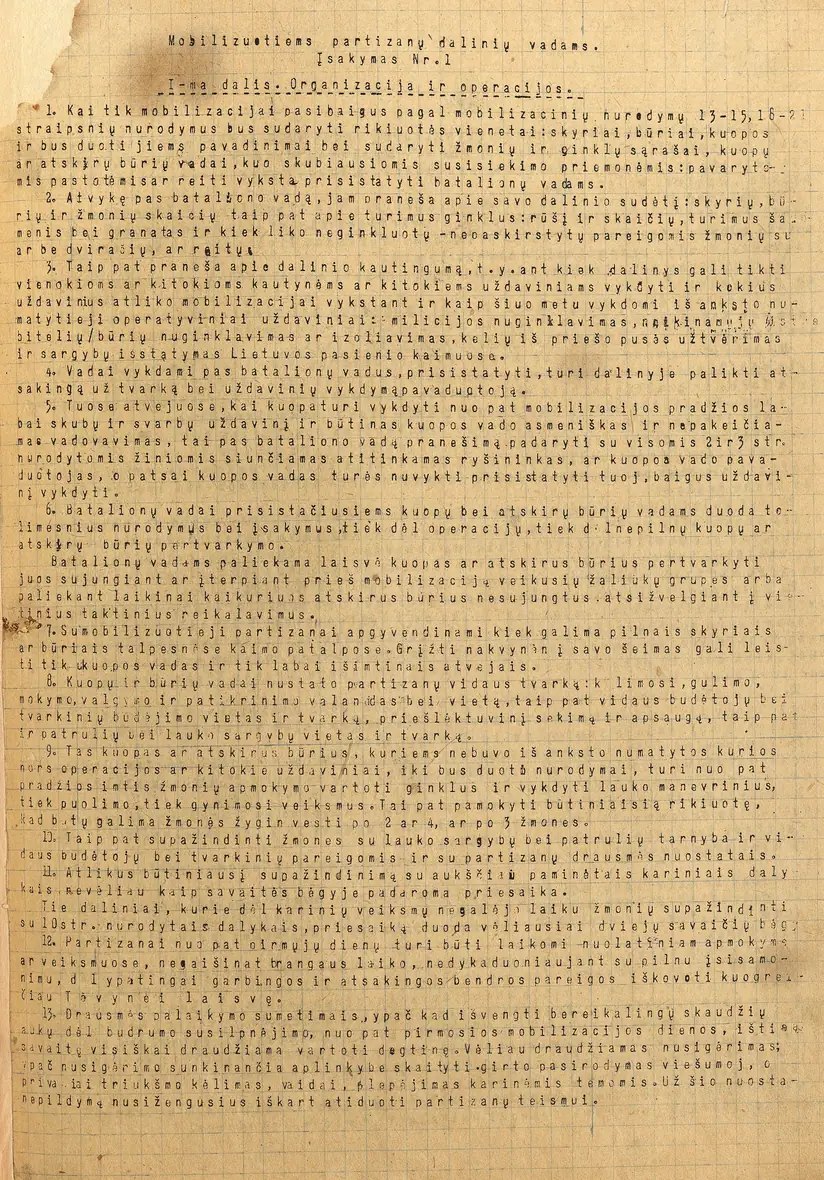
On 4 April 1945 Bijūnas, commander of the Kabeliai fighters, invited him to take command. In May it was decided to unite the partisans of Dzūkija into the Dzūkai Group. Kazimieraitis drafted the oath, the disciplinary statute and an order to keep diaries:
“The purpose of the diaries: to leave a true picture of the fight for freedom as material for history, and to help later find those quiet heroes known to few…”Order No. 1, 7 May 1945
In June the NKVD detained him in Kabeliai but let him go: with a bandaged head, he pretended to be ill. On 17 June 1945 Bijūnas was killed, and the next day Kazimieraitis left legal life for good. He told the liaison Jonas Grigas: “But we took an oath! We must show the whole world that the Lithuanian nation is alive…”
Commander
- 1945 08Meeting Vanagas, the Merkys Brigade
- 1945 11 18Founded the “A” District
- 1946 04 23Commander of the Southern Lithuania partisan region; the partisan commanders’ declaration
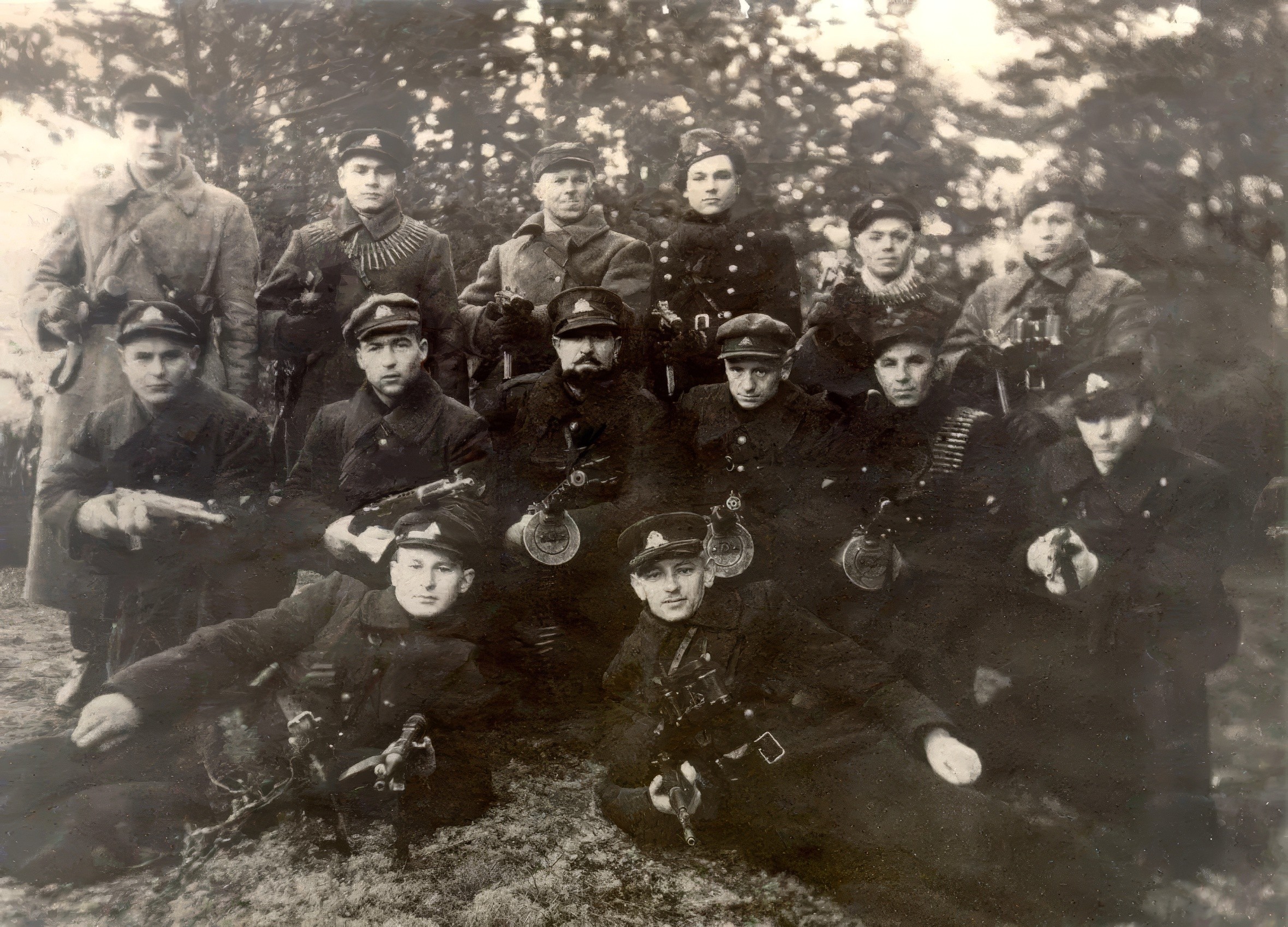
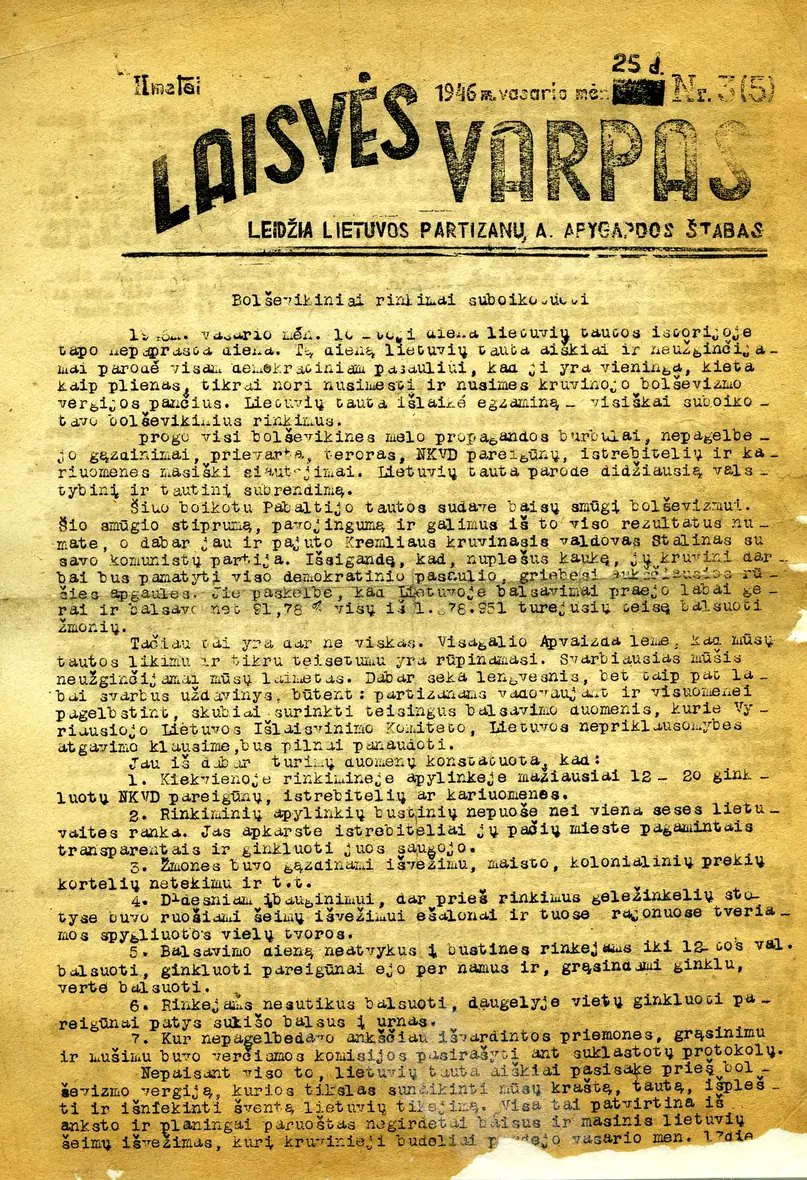
In early August 1945 he met Adolfas Ramanauskas-Vanagas, and the Merkys Brigade was soon formed. The headquarters moved between Lake Lavysas and the Skroblus stream near Rudnelė. The staff published the newspaper “Laisvės varpas” (The Bell of Freedom), and Kazimieraitis himself repaired the radio receiver and the duplicator. On 18 November 1945 he founded the “A” District. The historian L. Mockūnas later wrote that the Dzūkija partisans under his command were probably the strongest and best-organised partisan group in Lithuania at that time.
Read the full chapterCollapse1 min
On 12 January 1946 troops attacked the staff’s winter bunker by the Skroblus: his right-hand man Ėglis was killed and the staff diary was seized. Kazimieraitis was with Vanagas at the time. Vanagas recalled his words: “Such is God’s will. All that remains is to pray for the fallen and set to work with even more energy.” That winter he lived in Vanagas’s hideout in Kasčiūnai.
He saw the centralisation of the underground as his main goal and tried to form a supreme staff of the Lithuanian partisans. On 23 April 1946 he was elected commander of the Southern Lithuania partisan region. On the same day the regional staff under his command issued the first political declaration of the Lithuanian partisan commanders: the state would be free and democratic, and in an independent Lithuania power would belong to the nation. Its main principles were later repeated in the Declaration of the Council of the Movement of the Struggle for the Freedom of Lithuania of 16 February 1949.
He drafted the key documents of the partisan struggle: “Partisan Tactics and Command”, “Formation and Command of Partisan Units”, regulations for the field court-martial and for awards, the text of the oath and the partisan training programme, and he kept a war diary.
More – The struggle: the unifier, a winter underground, the Declaration →
Žaliamiškis
- 1946 06 08His last letter to his family
- 1946 07 02Severely wounded at Žaliamiškis, died in Guobiniai
- 1946 07His body buried in secret at Dzūkų g. 15, Leipalingis
He wrote his last letter to his family on 8 June 1946:
“The hand of Providence still protects me in my difficult duties. Only one thing weighs on me – longing for my dearest ones.”Last letter to his family, 8 June 1946
Read the full chapterCollapse1 min
On 2 July 1946 at Žaliamiškis, near the villages of Guobiniai and Janavas, he ran into a squad of MGB border troops. He returned fire with his pistol, was severely wounded by grenade fragments and bullets and was taken alive. The wounded man was taken to Kostas Bulavas’s farmstead in Guobiniai, where the troops had their field headquarters. He died there at about 8 p.m. According to the farmstead’s mistress, before he died he said he believed Lithuania would be free, and looked at the cross standing in the yard.
His body was taken to Leipalingis and left in the market square next to the church; the Chekists then buried it in the yard of the Leipalingis MGB headquarters at Dzūkų g. 15. To confirm his identity, the arrested editor of “Laisvės varpas”, Jonas Ivavičius, was brought from Vilnius; the body was dug up and buried again. Sergei Kruglov, the USSR Minister of Internal Affairs, reported his death to Stalin and other Soviet leaders. The news reached his family only on 23 July.
More – The struggle: the last day and the letters to Genutė →
The family’s fate
- 1948 05 22Genovaitė deported with five children to the Irkutsk region
- 1956Released from exile
- 1989The family rehabilitated
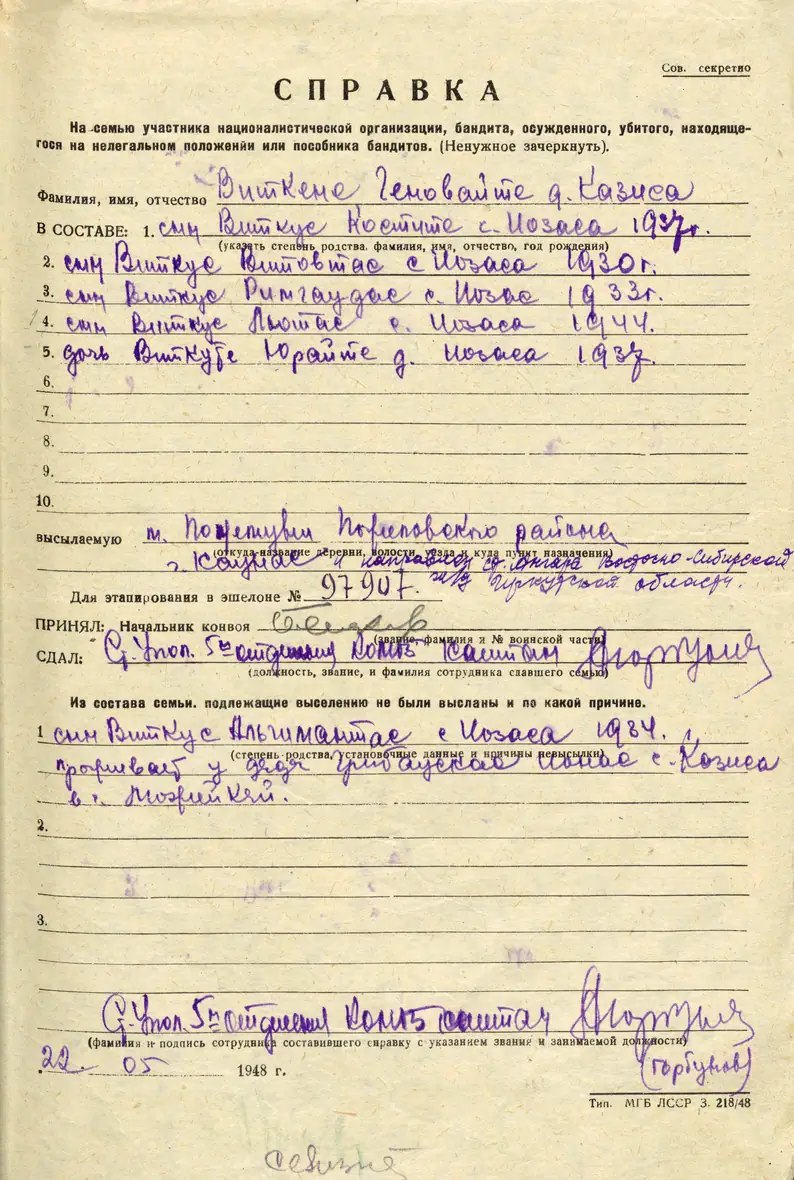
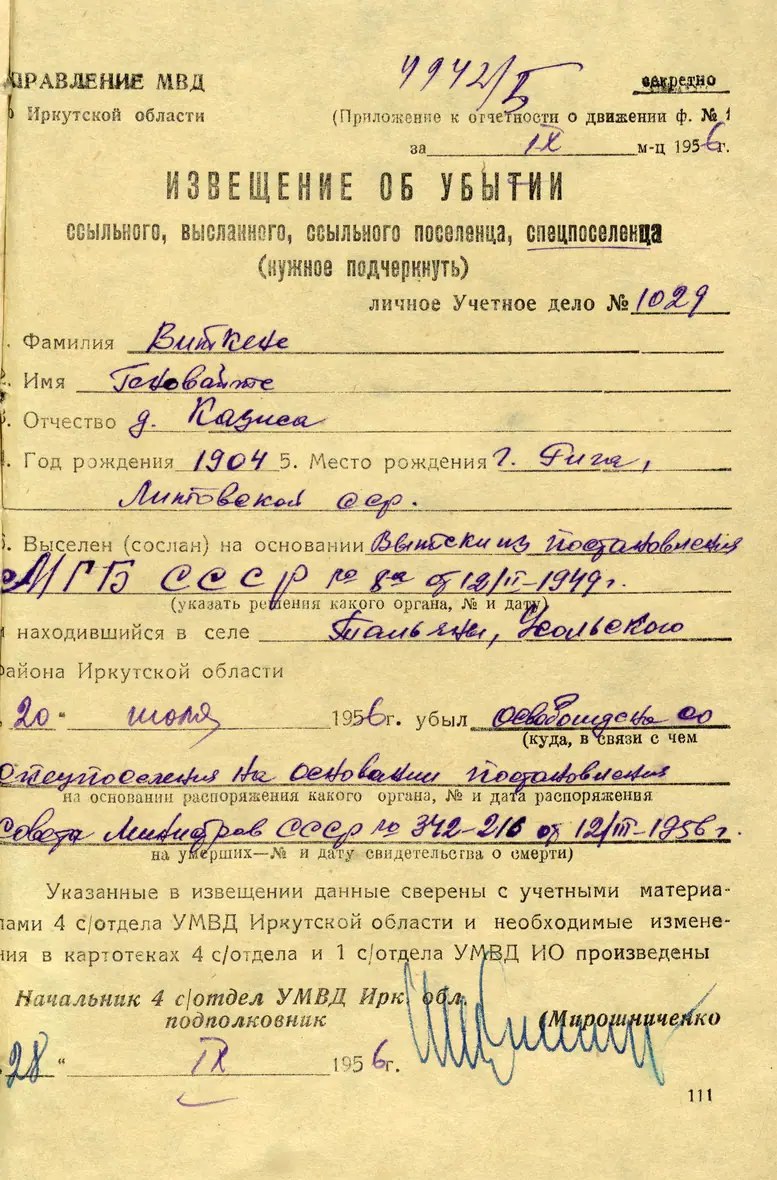
On 22 May 1948 Genovaitė and five of the children were deported to Taljany in the Usolye district of the Irkutsk region. Algimantas escaped deportation because he was living with his uncle in Mažeikiai, and the 77-year-old grandmother chose to stay in Lithuania. In exile Genovaitė worked as a teacher.
In July 1956 the family was released from exile and gradually returned to Lithuania, but the whole family was allowed to live in Lithuania only in 1963. They constantly faced restrictions and were watched by the Soviet security service. Genovaitė died in 1980. The family was rehabilitated in 1989, 41 years later.
Genovaitė’s full story – exile and return →
Found
- 2022 10 20Remains found in Leipalingis, in the yard of the former MGB headquarters
- 2022 11 28DNA testing confirmed his identity
- 2023 10 21Buried at Antakalnis Cemetery, near Vanagas
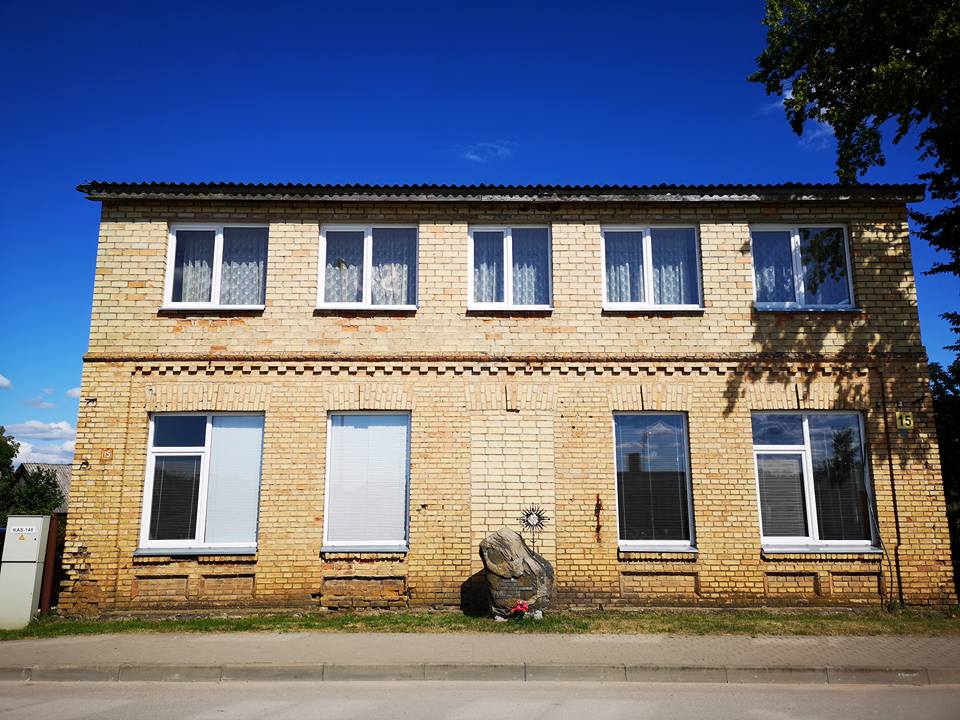
His grave was sought from 1991 but for a long time could not be found. On 20 October 2022, guided by a local resident, search specialists and archaeologists of the Genocide and Resistance Research Centre of Lithuania found his remains by the former “stribynas” in Leipalingis, next to the fence, under a tree. Personal belongings and a comb with his initials lay with them.
Read the full chapterCollapse1 min
His children provided samples for DNA testing. On 28 November 2022 it was announced that the test had confirmed his identity with 99.9% probability.
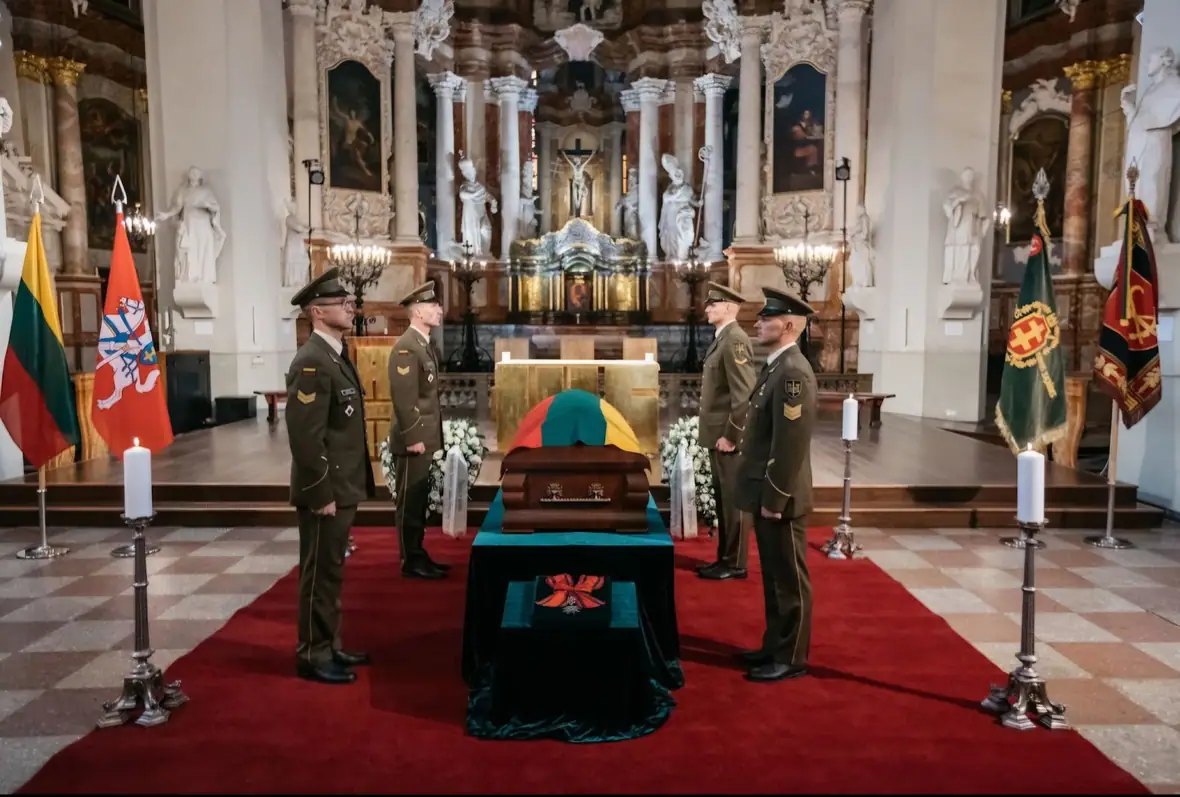
On 20 October 2023 his family said farewell to him in the chapel of the Tuskulėnai Peace Park. The coffin was then taken to the Church of St Johns at Vilnius University. Soldiers of the engineering battalion named after him and members of the Riflemen’s Union stood guard of honour. In the evening Mass was celebrated by Bishop Arūnas Poniškaitis and his grandson Fr Gintaras Vitkus SJ.
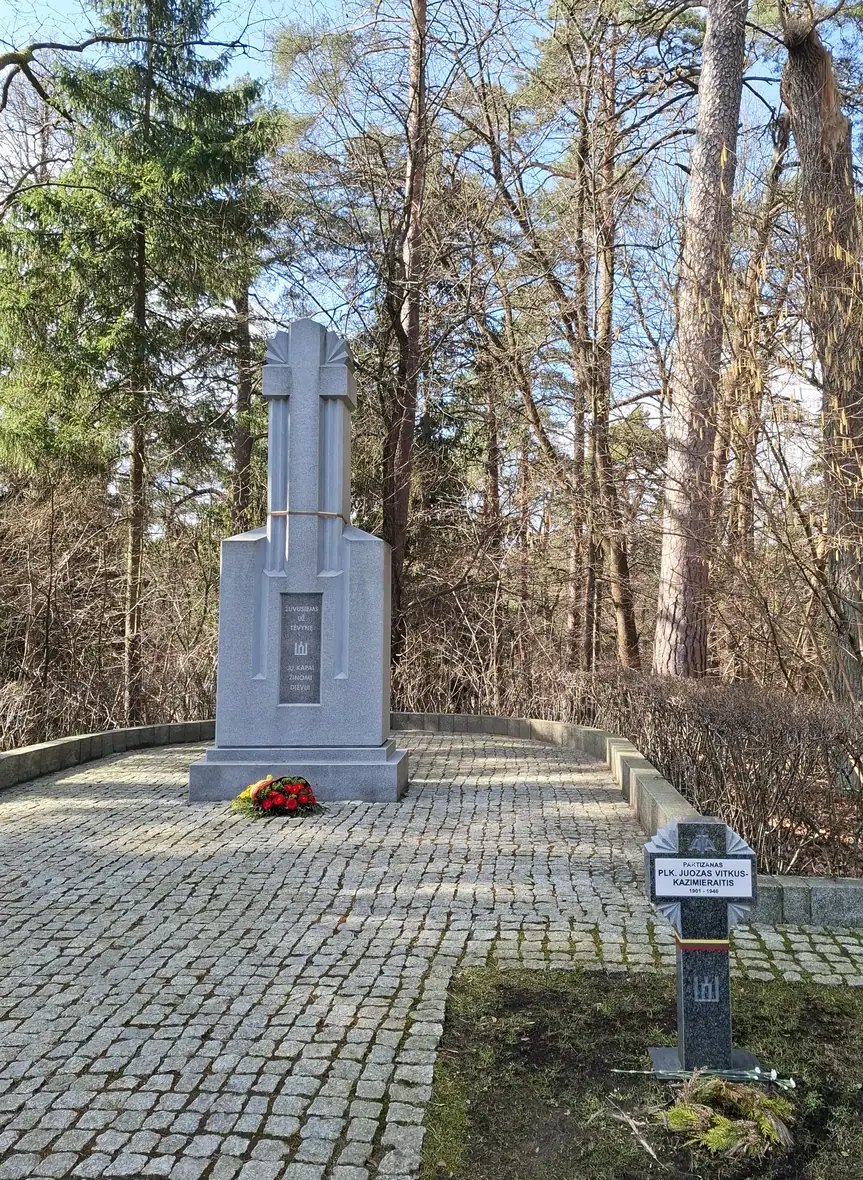
On 21 October Mass was led by Kęstutis Kėvalas, Metropolitan Archbishop of Kaunas. At 2 p.m. a procession accompanied the coffin to Antakalnis Cemetery, to the burial section for soldiers of the Lithuanian Armed Forces. Three volleys were fired, the national anthem was sung, and the folded flag was presented to his son Rimgaudas. Flags on state buildings were lowered to half-mast. His grave lies near that of Adolfas Ramanauskas-Vanagas.
On All Souls’ Day 1943 he told his wife he had a premonition that his family would never have a grave of his. Seventy-seven years later, there is a grave. And on 21 October 2026 the Vitkus family bought the building at Dzūkų g. 15, in whose yard he was buried. Here we are creating the Kazimieraitis Museum.
Remembrance
Vanagas wrote of him: “…an officer who kept his oath to his last breath; a fighter who was, and still is, rightly regarded as the ideal of a partisan.”
- 1947By decision of the Dainava District partisan commanders, the Merkys Brigade was named after Kazimieraitis.
- 1949 02 16By decision of the Presidium of the Movement of the Struggle for the Freedom of Lithuania he was posthumously awarded the title of Hero of the Freedom Fighters and the Cross of the Freedom Fights, 1st Class, with Swords.
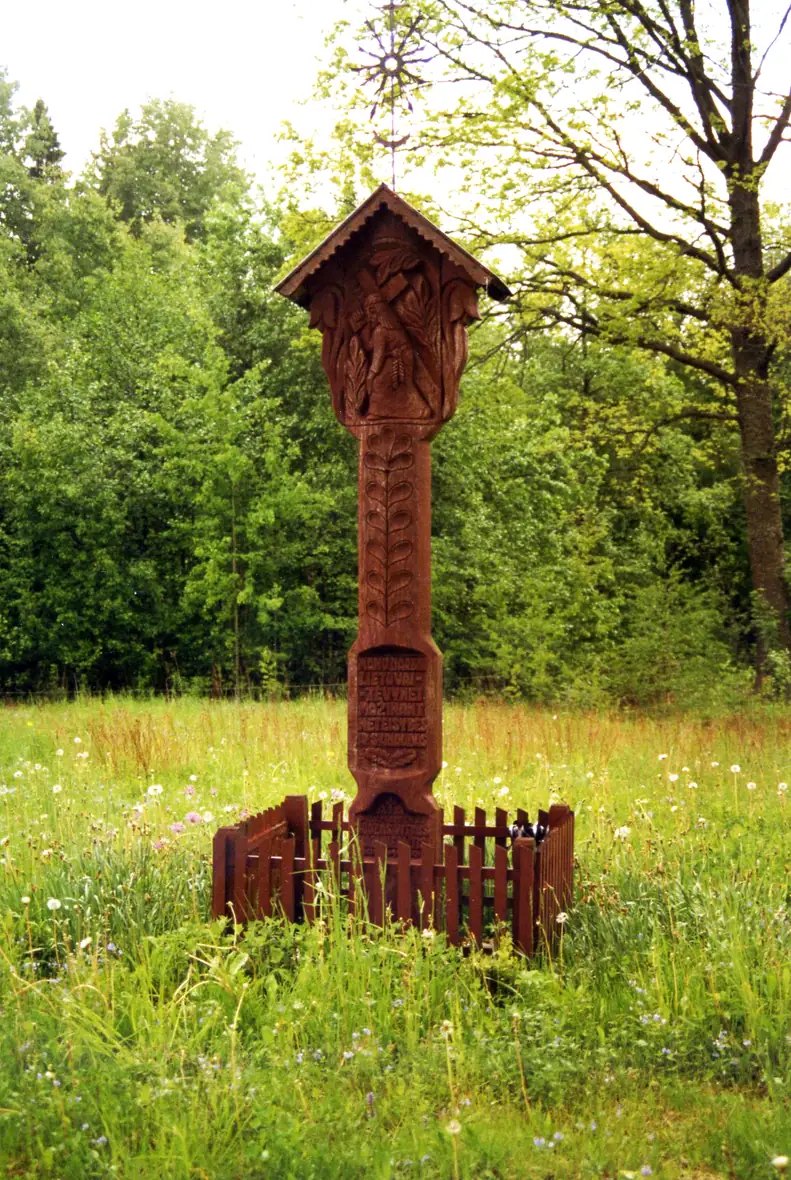
- 1990A wayside shrine was erected at the place of his death in Žaliamiškis. In 1991–1992 his grave was sought in Leipalingis but not found.
- 199650th anniversary of his death. A monument was unveiled in Viečiūnai, on the site of a former headquarters.
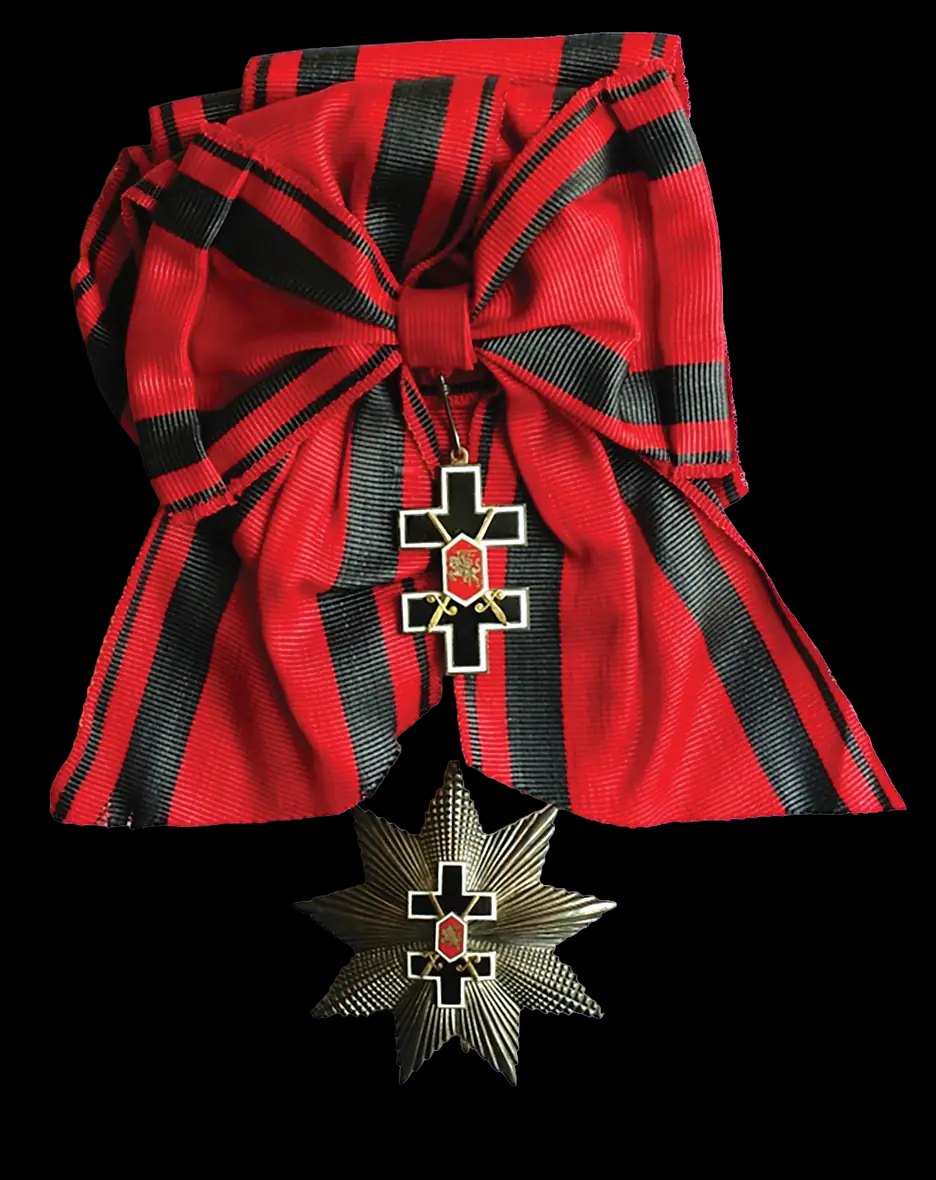
- 1997 11 20Order of the Cross of Vytis, 1st Class (posthumously). On 22 December he was recognised as a volunteer soldier.
- 1998 01 26Rank of colonel (posthumously).
- 1999The engineering battalion of the Lithuanian Armed Forces was named after him. The Tirkšliai school and streets in Vilnius, Kaunas and Varėna also bear his name.
- 2007 12 19A wayside shrine was unveiled at the engineering battalion in Kaunas.
- 2015On the initiative of the Vitkus family, the Colonel Juozas Vitkus-Kazimieraitis Society was founded.
- 2022 10 20His remains were found in the yard of the former “stribynas” in Leipalingis; in November his identity was confirmed by DNA testing.
- 2023 10 21Buried with state honours at Antakalnis Cemetery in Vilnius, near A. Ramanauskas-Vanagas.
- 2026 0780th anniversary of his death at Žaliamiškis.
- 2026 10 21The Vitkus family bought the building at Dzūkų g. 15 in Leipalingis. The Kazimieraitis Museum is being created here.
Sources: virtual exhibition “Not one step from my land” (LT) (LGGRTC Museum of Occupations and Freedom Fights); Vytautas Vitkus, “Pulkininkas Kazimieraitis. Pietų Lietuvos partizanų srities vado Juozo Vitkaus gyvenimas, veikla, šeimos likimas” (Colonel Kazimieraitis: the life, work and family fate of Juozas Vitkus, commander of the Southern Lithuania partisan region), Vilnius, 2025 (earlier edition Kaunas: Vitae Litera, 2017); LGGRTC and Ministry of National Defence announcements; Vitkus family archive. All sources are in Lithuanian.
Soldiers and partisans called him “Father”.
“Never again in my life did I meet a soldier like Father.”– H. Kardelis-Juozas Vokietis, comrade-in-arms
A violin from a spruce board
As a teenager he carved himself a violin from a thick spruce board. Later he even played classical pieces on it, and the home-made violin hung in Genovaitė’s house in Panemunė.
Source: his son V. Vitkus’s book; testimony of his grandson G. Vitkus SJ“Father”
That is what the privates of the Pioneer Battalion called him – strict but fair, sleeping in the barracks with them on marches. Later the partisans called him that too.
Source: V. Vitkus’s book; article by L. Vitkus“So you’re still awake, little bean?”
Coming home late from an underground meeting, he got a slap from his wife: his “little bean” had five children to feed. The story was told by his daughter Jūratė.
Source: “Karys”, 2022; the film scriptNot a single photograph from the forest
He kept to the conspiracy rule never to be photographed, so there is not a single photograph of him as a partisan. He carried only a Browning pistol in a specially sewn pocket.
Source: “Karys”, 2022; A. Ramanauskas-VanagasButtermilk like cake
“I used to bring the colonel buttermilk without cream, and he ate it like cake,” recalled the liaison Juozas Jakavonis-Tigras. His rule was simple: eat what you are given.
Source: memoirs of J. Jakavonis-Tigras“Angel of God, my guardian dear…”
Every day he said the prayer to the guardian angel and recited the litany by heart. He chose his code name hoping for the protection of St Casimir.
Source: “Karys”, 2022; J. Jakavonis-TigrasA shelter in England
In 1906 his mother set sail with three children to join their father in America, but the family was detained in England: the mother was put to work in a laundry and the children were placed in a shelter. Their father found them, and in 1907 the family returned to Lithuania.
Source: “Karys”, 2022; V. Vitkus’s bookA sick old man with a bandaged head
In June 1945 the NKVD detained him in Kabeliai but let him go. The lieutenant colonel had pretended to be a sick old man with a bandaged head.
Source: “Karys”, 2022 (part II)“My family will have no grave of mine”
On All Souls’ Day 1943, in a Vilnius cemetery, he whispered to his wife that his premonition told him the family would never have a grave of his. His remains were returned to the family only in 2023.
Source: memories of his granddaughter R. Kinderienė