The struggle
“But we took an oath.” Six years – from a foreign uniform in 1940 to Žaliamiškis in 1946.
Six years – from the Soviet occupation in 1940 to his death at Žaliamiškis in 1946. This was the time when the military engineer Lieutenant Colonel Juozas Vitkus became Kazimieraitis – one of the highest-ranking officers to go into the forest, and the first to unite the partisans of Dzūkija.
“…an exceptionally hard-working, fair, patient, sober and deeply religious man.”Adolfas Ramanauskas-Vanagas on Kazimieraitis
A foreign uniform
- 1940 09War School closed, transferred to Vilnius
- 1941 06Did not return to the Soviet train during an air raid
- 1941 06Helped restore Lithuanian units
In June 1940 the Red Army entered Lithuania. J. Vitkus was then a lecturer at the War School, a lieutenant colonel and father of five. In September the War School was closed; part of it was attached to the 29th Territorial Rifle Corps and moved to Vilnius. J. Vitkus left his family in Kaunas and went with it. He was issued a uniform with Red Army insignia and the Soviet rank of podpolkovnik.
Read the full chapterCollapse1 min
From Vilnius he wrote ordinary letters home about his pay, the children’s health and their schooling. In March 1941 he wrote to his mother:
“Although the world has gone mad and the war rages ever wider, as for our little corner I do not expect any greater danger…”Letter to his mother, 8 March 1941
His fellow student Vincas Žilys, sent to teach at the artillery academy in Moscow, was arrested and deported to the North. J. Vitkus escaped that fate.
In June 1941 the war caught him at the Pabradė–Švenčionėliai training ground. The War School was ordered to retreat deep into Russia. On the way east the column was strafed by aircraft. J. Vitkus and Colonel Karolis Dabulevičius hid in a rye field and a ditch. They were searched for but not found, and the train left without them. Both tore off their Red Army insignia and, helped by local people, returned to Vilnius. Soon J. Vitkus went to Kaunas, contacted the Provisional Government and, putting on an old Lithuanian uniform, joined those trying to restore Lithuanian units.
An office on Gediminas Avenue
- 1941 08Head of the Vilnius housing department
- 1942The Lithuanian Front and the “Kęstutis” organisation
- Autumn 1942Taught at the LLA underground war school
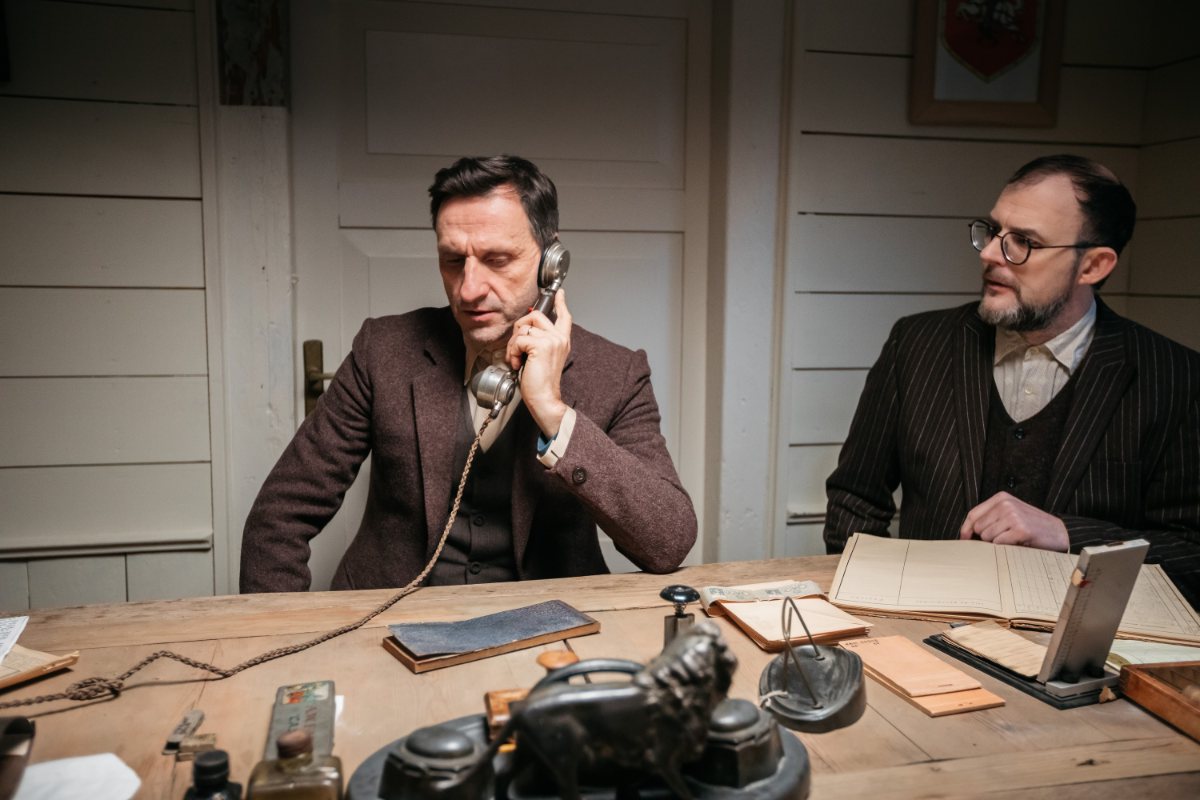
In August 1941, at the invitation of the Vilnius mayor K. Dabulevičius, J. Vitkus became head of the housing and real estate department of the Vilnius municipality. In December the whole family moved to Vilnius. His salary barely covered the food rationed on cards. He worked on Saturdays too; the children saw their father only on Sundays, when everyone went to church and he climbed up to the organ to sing in the choir.
Read the full chapterCollapse1 min
The Nazi authorities did not recognise Lithuania’s autonomy, and in May 1942 Catholic young people formed the underground Lithuanian Front. J. Vitkus was one of the founders and a staff member of its military organisation “Kęstutis”. The first underground meetings were held in the daytime, in his office at the Vilnius housing administration on Gediminas Avenue. Sometimes they met in a flat on Uosto Street, pretending to be card players. All had sworn not to betray the plans even on pain of death.
“Colonel Vitkus impressed us with his intellect, courage, logical decisions and administrative experience.”Testimony of his underground comrade Arbas-Arbačiauskas
The underground protected young people from German military conscription, supported the families of those mobilised and stockpiled means for the fight. In autumn 1942 J. Vitkus began teaching military engineering, unpaid and to his own syllabus, at the underground school of the Lithuanian Freedom Army (LLA). His students swore allegiance to the LLA and joined the resistance.
Caution was needed under the German occupation too. At home he kept a coiled rope so that, if necessary, he could let himself down from the balcony and escape.
Resolve
- 1944 05Brought the family back to Panemunė
- 1944 07 12Refused to flee to the West
- 1944 10 28Son Liudas born
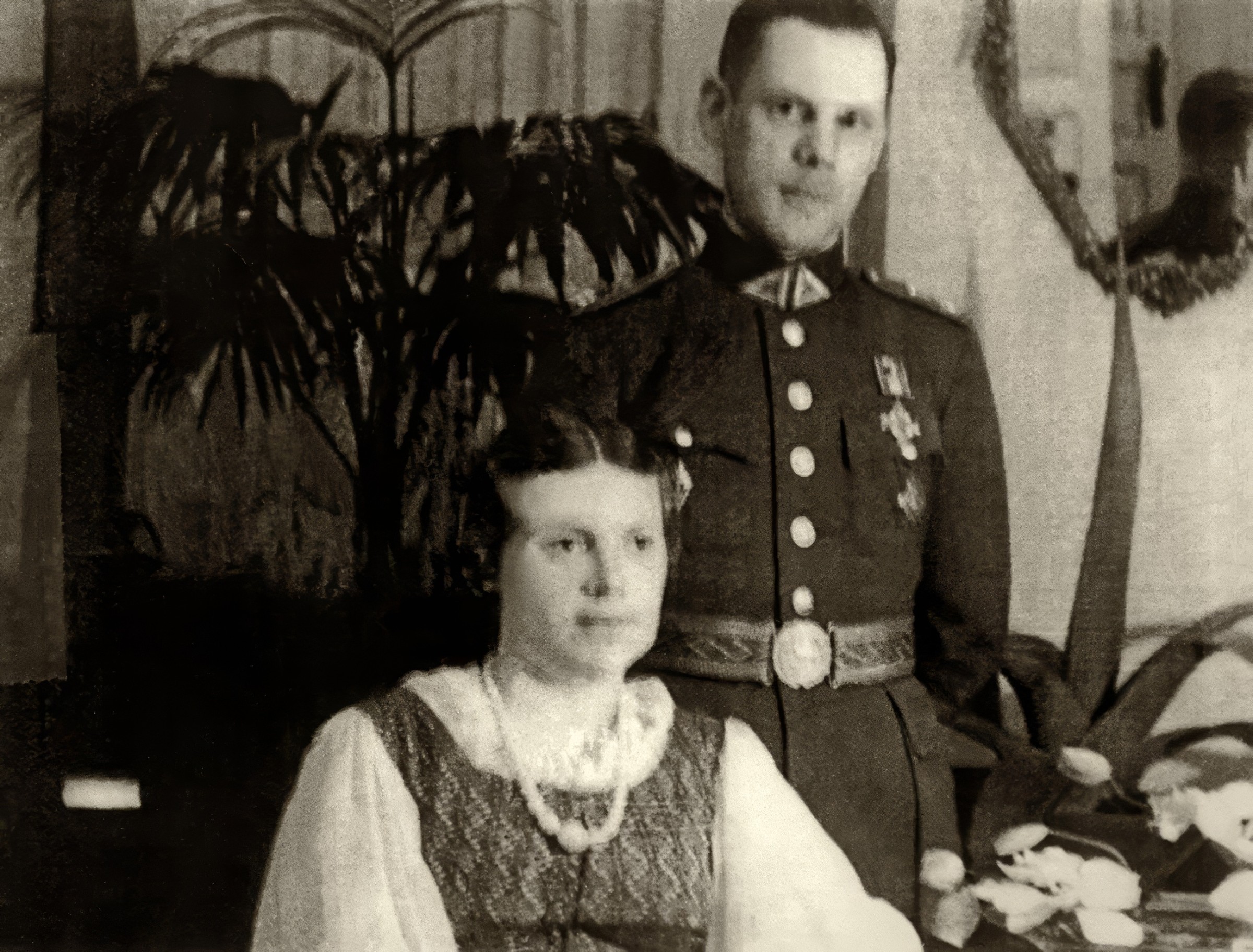
In May 1944, as the front approached, J. Vitkus brought his family back to their house in Panemunė, Kaunas: a smaller town was safer than the capital. In July the Red Army took Vilnius and Kaunas. His brother Valerijonas, fleeing west, urged him to come along, but Juozas refused.
“Not one step from my land – that is my resolve; only my family worries me.”To his brother Valerijonas, 12 July 1944
Read the full chapterCollapse1 min
He could no longer find work: many knew he was a high-ranking officer and were afraid to take the risk. In August 1944 he was in Panemunė with his family, preparing firewood for the winter and working in the garden and orchard. It was a farewell. When he went to Vilnius, former neighbours told him Soviet agents had already visited his flat six times. After that he came to Panemunė only in secret.
He told neither his wife nor his children about his underground activity. The less the family knew, the less danger they faced under interrogation. On 28 October 1944 his youngest son, Liudas, was born. At Christmas Juozas visited home and said he would be working as bookkeeper of the Kabeliai forestry office in Dzūkija. Both understood it was a cover.
Kabeliai
- 1944 12Farmsteads burned, partisan ranks grow
- 1945 04 04Bijūnas invited him to take command
- 1945 06 18Left legal life for good
The Soviets declared almost all men under 55 liable for mobilisation. Men hid in the forests and the mobilisation stalled. In December 1944, on Christmas Eve, mass punitive operations began: wherever men were suspected of hiding, farmsteads were shot up and burned. Hundreds of farmsteads were burned in Lithuania that month. This turned many into partisans: they had to choose between the Red Army and armed struggle.
Read the full chapterCollapse1 min
According to NKVD data, in December 1944 about 30 partisan units were active in Alytus county alone. Across Lithuania some 30,000 men were fighting with weapons. The units formed on their own, and their commanders were looking for a higher command that did not yet exist.
J. Vitkus came to Dzūkija not to hide but to unite. On 4 April 1945 a gathering of the Kabeliai fighters was called on his initiative. The unit commander Bijūnas met him and invited him to take command. At first the men called him “Old Man” and “Father”; later he chose the code name Kazimieraitis, linking it with St Casimir. In May, with several unit commanders, he set up the staff of the Dzūkai Group.
In May an amnesty was announced. Some of the men thought they could go home. Kazimieraitis did not forbid them to legalise: he understood that a unit cannot be held together by force. The NKVD never let those who came out out of its sight: all were interrogated, and some were killed.
On 17 June 1945 NKVD troops searched Kabeliai and detained Kazimieraitis. They told him to unwrap his bandaged head and show the wound, checked his papers and let him go. That same day the partisan camp was attacked and Bijūnas was killed. Kazimieraitis was not in the camp at the time. The next day he left legal life for good and never returned to Kabeliai.
The unifier
- 1945 08 01Meeting Vanagas near Nedzingė
- 1945 11The “A” District, contact with the LLA and the West
- “Laisvės varpas”Radio news turned into a newspaper
The staff moved to the Merkys camp. The diary records that Kazimieraitis was delighted to find a well-working radio set, a disciplined group and a dry place. He organised the partisan movement on the army model: sections, battalions, brigades, each battalion with its own rural district so that units would not cross paths.
Read the full chapterCollapse1 min
He drafted the oath and the disciplinary regulations. He banned drunkenness, robbery and using the partisan name for personal gain. He ordered friendly relations with the population, making do with what people gave, and avoiding any cruelty. He also urged unarmed resistance: not to vote, not to collaborate, to sabotage.
In early July Kazimieraitis returned to the Merkys camp via Nedzingė. There he happened to meet Daktaras, deputy to Vanagas, the partisan commander of the Merkinė area, and arranged to meet Vanagas himself on 1 August.
“Before I even saw the man I recognised his voice and realised it was the former War School lecturer, Lieutenant Colonel Vitkus, who had taught us engineering.”Adolfas Ramanauskas-Vanagas, “Daugel krito sūnų” (Many Sons Have Fallen)
Vanagas immediately agreed to join the Dzūkai Group and became Kazimieraitis’s closest comrade-in-arms. By summer 1945 Kazimieraitis had brought together about half of the Dzūkija partisans. Negotiations with Captain Dominykas Jėčys-Ąžuolis’s Dzūkai Brigade took the longest.
In November 1945 he founded the “A” District. On 10 November, meeting a liaison of the LLA supreme staff in Alytus, he agreed to submit to the LLA command and to lead a district covering the counties of Alytus, Trakai, Eišiškės and Ašmena. That same month Jonas Deksnys arrived from the West. This was the partisans’ first link with the West. Deksnys promised to send officers, and Kazimieraitis was already choosing landing sites for parachutists.
Listening through headphones to French and German radio news from London and Hamburg, he wrote it down and passed it to Vanagas. Vanagas retyped it on a typewriter, and so the newspaper “Laisvės varpas” came into being, with up to a thousand copies per issue. Stencils were scarce, so Kazimieraitis usually did the copying himself.
A winter underground
- 1945 12 24Christmas Eve with the Krušas family, the Lithuanian anthem
- 1945 12 25Writing mobilisation instructions alone
- 1946 01Ėglis killed, the staff diary seized
The staff’s winter headquarters was built near the village of Rudnelė, by the Skroblus stream. The partisans walked to the bunker along the stream so that dogs could not pick up their tracks. Underground it was a few degrees above zero and damp. Coming back wet, you had to dry off and rest to have strength again.
“The hideout is unheated and always damp.”Dzūkai Group staff diary (LT), 12 December 1945
Read the full chapterCollapse1 min
The bunks were cramped for four men; light came from a wick in pork fat. Lack of air was the worst torment. You could recognise partisans by their yellowed skin and bluish shadows under the eyes.
“The lack of oxygen especially tormented Kazimieraitis, so we had to open the hatch more often; later we bored a tiny hole from inside, but it helped little.”Adolfas Ramanauskas-Vanagas
Local people helped the partisans survive: they let them wash, fed them, washed and mended their clothes and warned them of troop movements. There were agents among them too. Once the sole of Kazimieraitis’s boot came off. The liaison Juozas Jakavonis-Tigras took it to the village shoemaker, who, as it turned out only many years later, was an agent who had been briefed on what boots Kazimieraitis wore.
He did not go home for Christmas. The staff spent Christmas Eve with the Krušas family in a neighbouring village:
“We sang three Christmas carols and then spent the whole evening singing partisan and folk songs. We parted only at one in the morning, after singing the Lithuanian anthem.”Dzūkai Group staff diary (LT), 24 December 1945
On Christmas Day, when the others went to visit acquaintances, Kazimieraitis stayed alone in the hideout and wrote “Mobilisation Instructions for Lithuanian Partisans”: what to do when war broke out and Lithuania could restore its army.
In January 1946 troops attacked the Skroblus headquarters. His closest aide Ėglis was killed, and the soldiers found and seized the Dzūkai Group staff diary. Kazimieraitis was at Vanagas’s headquarters in Kasčiūnai at the time. Once, during an NKVD search, he and Vanagas hid in the bunker until the air began to run out. The lamp was going out; Kazimieraitis prayed. When the danger had passed, Tigras opened the hatch and helped him climb out.
“Such is God’s will. All that remains is to pray for the fallen and set to work with even more energy.”Kazimieraitis’s words, as recounted by A. Ramanauskas-Vanagas
Every day he recited the Litany of the Blessed Virgin Mary by heart, and he taught it to Tigras. Later Tigras recited it with other prisoners in the death-row cell of the KGB cellar.
The Declaration
- 1946Last meeting with his son Vytautas
- 1946 04 23Commander of the Southern Lithuania partisan region
- 1946 04 23The first political declaration of the partisan commanders
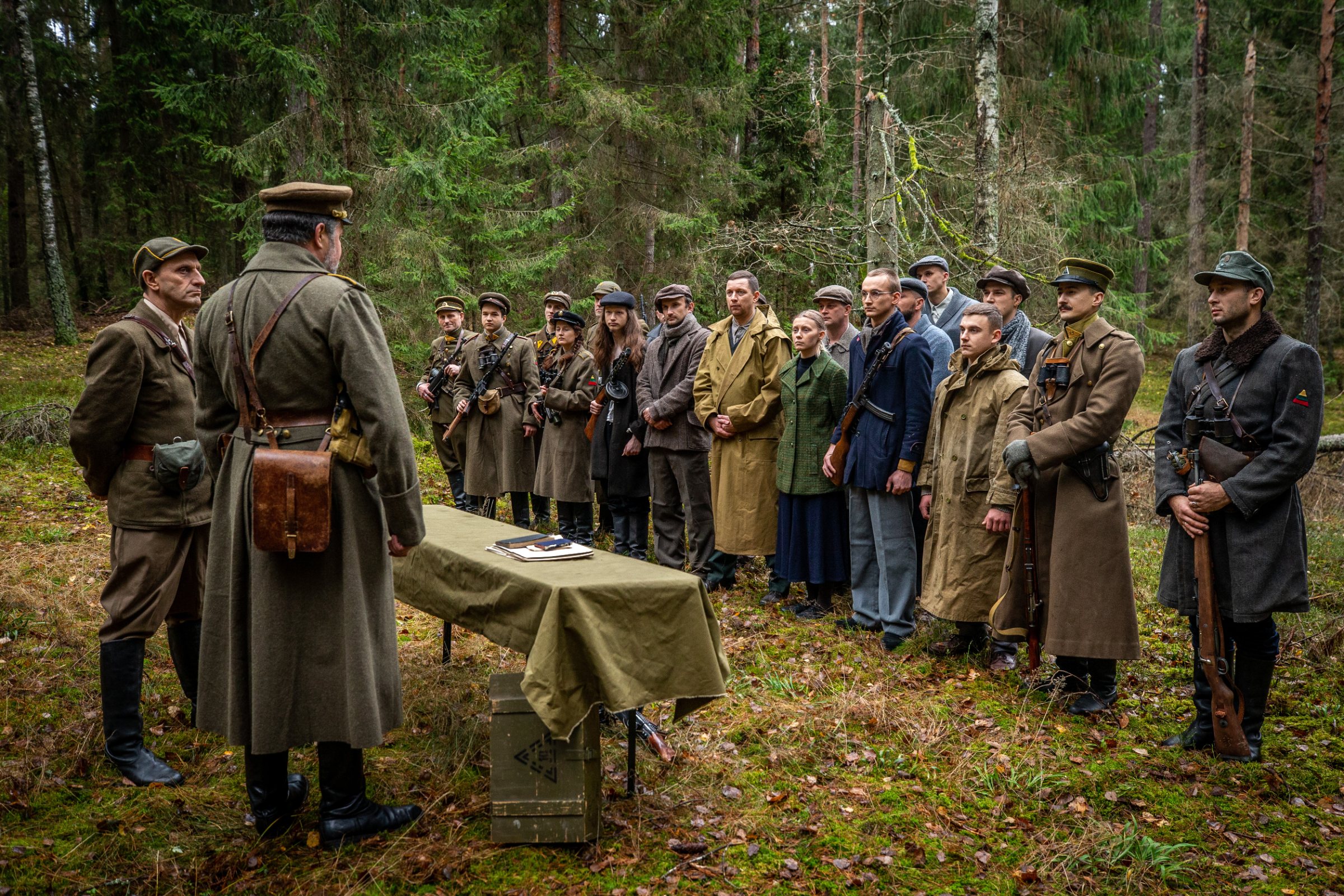
After the January events Kazimieraitis briefly returned to Panemunė. He came by cart, dressed in a country sheepskin coat and a peaked cap. He said goodbye to Genovaitė at home, and his son Vytautas accompanied him as far as the Kairiūkštis farmstead beyond Rokai.
“Once we were out in the fields, Father quietly sang the partisan anthem and handed me the words and notes written in pencil on half a sheet of exercise book paper.”Vytautas Vitkus, memoirs
Read the full chapterCollapse1 min
Father asked him to look after his mother and help her in every way he could. They kissed goodbye. It was their last meeting.
In March the staff moved to the Petrauskas family in the village of Snaigupė. On 23 April 1946 Kazimieraitis was elected commander of the Southern Lithuania partisan region, and on the same day the regional staff under his command issued the first political declaration of the Lithuanian partisan commanders. It proclaimed that the system of an independent Lithuania would be free and democratic. Some of its principles were later carried over into the LLKS Declaration of 16 February 1949.
In May the staff worked in the village of Jakubiškiai with Antanas Uoselis, until security officers found a straw tent with a small printing press in the forest. The staff then moved to hastily built bunkers in Žaliamiškis. Kazimieraitis never wore a uniform: he went about in civilian clothes, clean-shaven, with a pistol.
The family received his last letter in June:
“Only one thing weighs on me – longing for my dearest ones. <…> The only help I can give is prayer.”Last letter to his family, 8 June 1946
Žaliamiškis
- 1946 07 02Severely wounded at Žaliamiškis, died in Guobiniai
- LeipalingisIdentified by his French notes and by witnesses
- 1946 07 23The family received a note signed “Pergalė” (Victory)
In spring 1946 the partisans kept to small groups, and the troops no longer combed the forests en masse – they organised raids based on agents’ reports. A roving agent code-named Vilkas reported that the regional commander was hiding around Žaliamiškis. A large raid was organised across several rural districts, searching for a small reconnaissance group.
Read the full chapterCollapse1 min
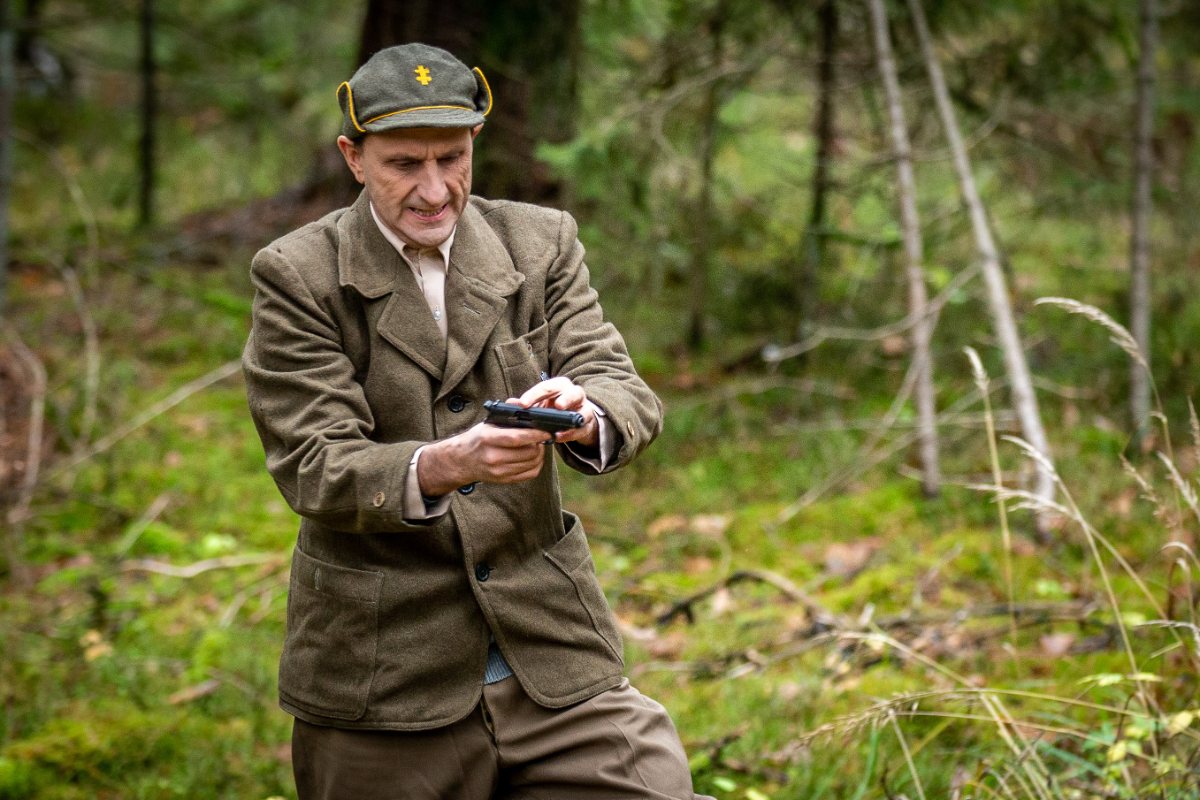
On 2 July two staff members quarrelled in the bunker. Kazimieraitis, who disliked quarrels, climbed up to the surface. At about 2 p.m. he was spotted by a group of nine soldiers walking beside the road to Guobiniai. He returned fire with his pistol and wounded a soldier, but was severely wounded by bullets and grenade fragments. The wounded man was taken by cart to Kostas Bulavas’s farmstead in Guobiniai. He died there at about 8 p.m.
He was in civilian clothes, so at first they thought an ordinary partisan had been killed. In his pockets they found a prayer book, documents, photographs and a notebook with entries in French. A villager who wrote in French aroused suspicion. In Leipalingis the body was dug up and shown to people who had known him. That is how his identity was established. He was buried by the “stribai” headquarters at Dzūkų g. 15, and lay there for 76 years.
On 23 July 1946 a stranger brought the family a note written in pencil and signed “Pergalė”. It reported the death of Juozas Vitkus but did not say where.
Sergei Kruglov, the USSR Minister of Internal Affairs, reported his death in writing to Stalin, Molotov, Beria and Zhdanov.
“I miss you all terribly”
He wrote to his wife from Brussels, from Vilnius and from the forest. Letters from Dzūkija were passed on through a priest in Nedzingė, without a return address.
“A sense of duty calms me when I am restless with longing, and makes me work, work and work again, so that I do not shame myself or my country in the eyes of foreigners.”
“I won’t need to buy underwear any more, as I will get 3 pairs a year from the army… Write and tell me how the children are and how they are doing at school.”
“My dearest Genutė, dear children and Granny, I am writing to you from my summer retreat, the quiet forests of Dzūkija <…> I miss you all terribly, but unfortunately I cannot come home, as my special duties do not allow it.”
“My conscience reproaches me especially for my guilt towards you, my dearest Genutė, for burdening you with such hardship, while I cannot help you, especially in these hard times.”
“The hand of Providence still protects me in my difficult duties. Only one thing weighs on me – longing for my dearest ones.”
“I send my warmest kisses to my dear Genutėlė, the children and Granny.”
The ultimate sacrifice
Kazimieraitis led the partisans for little more than a year. In that time he created the structure, discipline and documents on which the later leadership of the Lithuanian partisans as a whole relied. On 16 February 1949 the LLKS Council awarded him the title of Hero of the Freedom Fighters and the Cross of the Freedom Fights, 1st Class, with Swords.
“My life is divided like this: prayers for my dearest family <…>; my work for my homeland Lithuania, reducing injustice and wrongs, comforting the downhearted and those who have lost hope <…>”From a letter by J. Vitkus
“…an officer who kept his oath to his last breath; a fighter who was, and still is, rightly regarded as the ideal of a partisan.”Adolfas Ramanauskas-Vanagas, memoirs
The words “nepaprasta auka” – an extraordinary sacrifice – were spoken by his brother Valerijonas: Juozas loved his family and still he stayed. The documentary film took the same title.
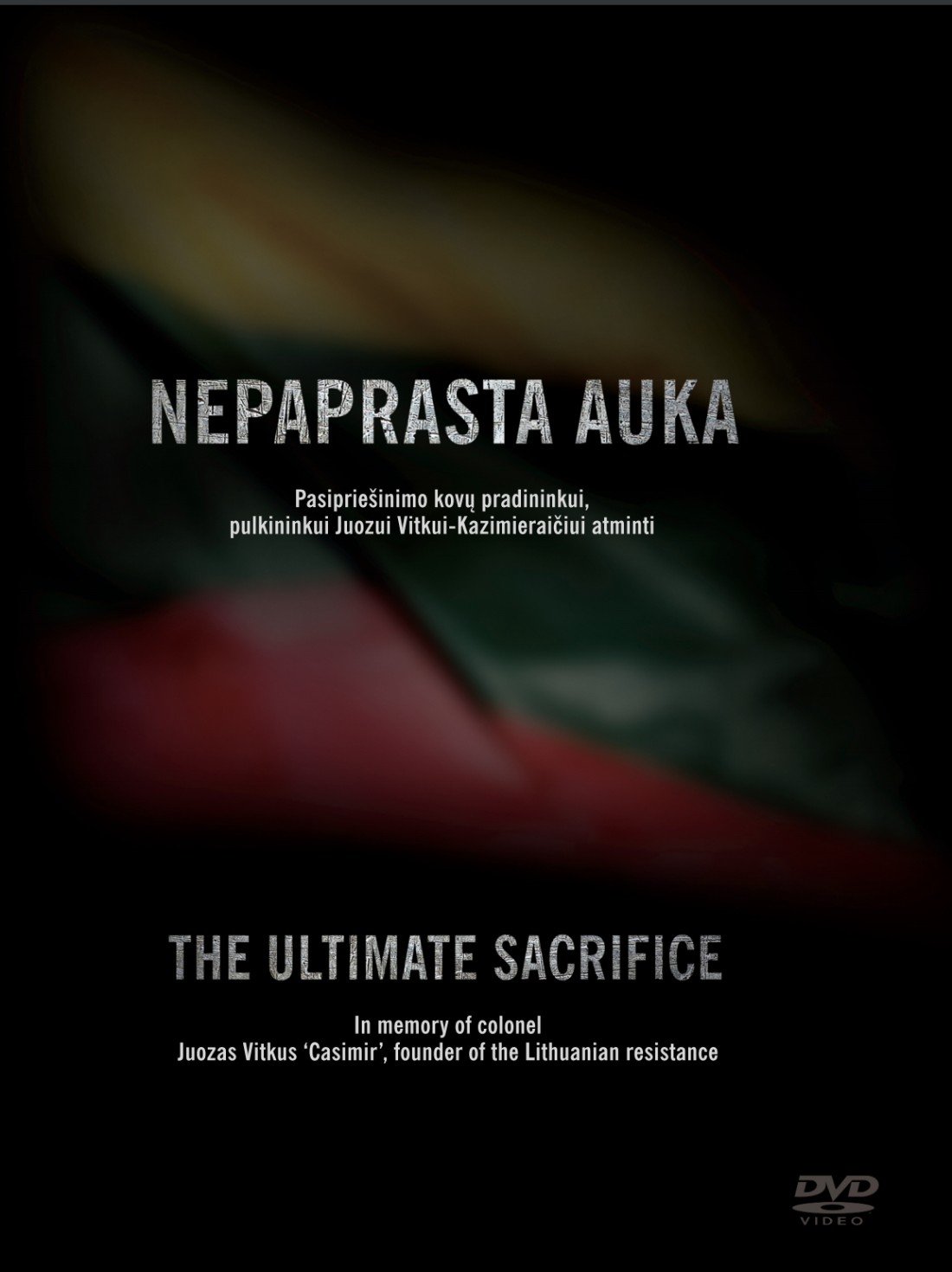
“The Ultimate Sacrifice” (“Nepaprasta auka”)
A historical documentary in memory of Colonel Juozas Vitkus-Kazimieraitis.
Watch on LRT Epika (LT)Sources (in Lithuanian): the Dzūkai Group staff diary; A. Ramanauskas-Vanagas’s memoirs “Daugel krito sūnų”; letters of J. Vitkus; Vytautas Vitkus, “Pulkininkas Kazimieraitis”, 2017; the documentary “Nepaprasta auka”, 2017; Vitkus family archive.